New Approaches to Security: Diversification in a Changing World

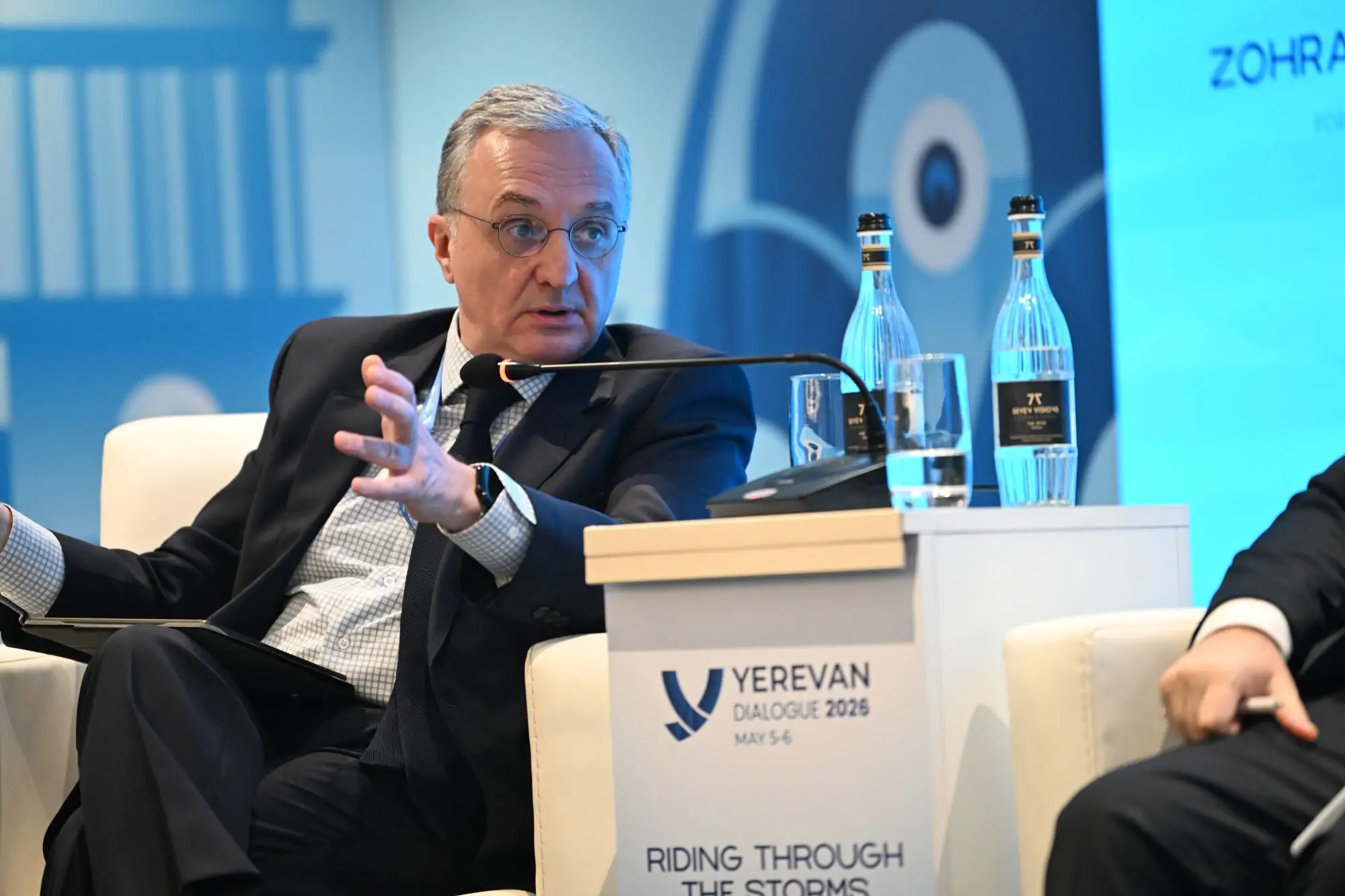
The panel discussion “New Approaches to Security: Diversification in a Changing World” was held within the framework of the Yerevan Dialogue 2026, co-hosted by the Konrad Adenauer Foundation, bringing together experts and policymakers to explore evolving security dynamics in the South Caucasus.

The panel discussion was moderated by Jakob Wöllenstein, Head of Political Dialogue South Caucasus of the Konrad Adenauer Stiftung of Germany, and brought together Thomas Tödtling, Executive Director of the New York Office of the Konrad Adenauer Foundation of Austria; Laura Linderman, Director of Programs and Senior Fellow for Eurasia and Director of Programs of the Central Asia-Caucasus Institute of the United States; Mitat Celikpala, Vice Rector of Kadir Has University of Türkiye; and Zohrab Mnatsakanyan, Former Minister of Foreign Affairs of Armenia.

The discussion examined the evolving nature of security in the region, shaped by ongoing geopolitical developments and emerging frameworks for cooperation. Participants analyzed how the diversification of partnerships and policy approaches can contribute to long-term stability and resilience.

Particular attention was devoted to the changing regional context, including emerging connectivity initiatives, normalization processes, and sustained diplomatic engagement. Participants emphasized that these developments present both opportunities and challenges for achieving durable peace and security. The discussion concluded that navigating an increasingly complex security environment requires adaptive strategies, diversified partnerships, and continued dialogue.

Regional Subsystems as Shock Absorbers in the Transformation of the International System

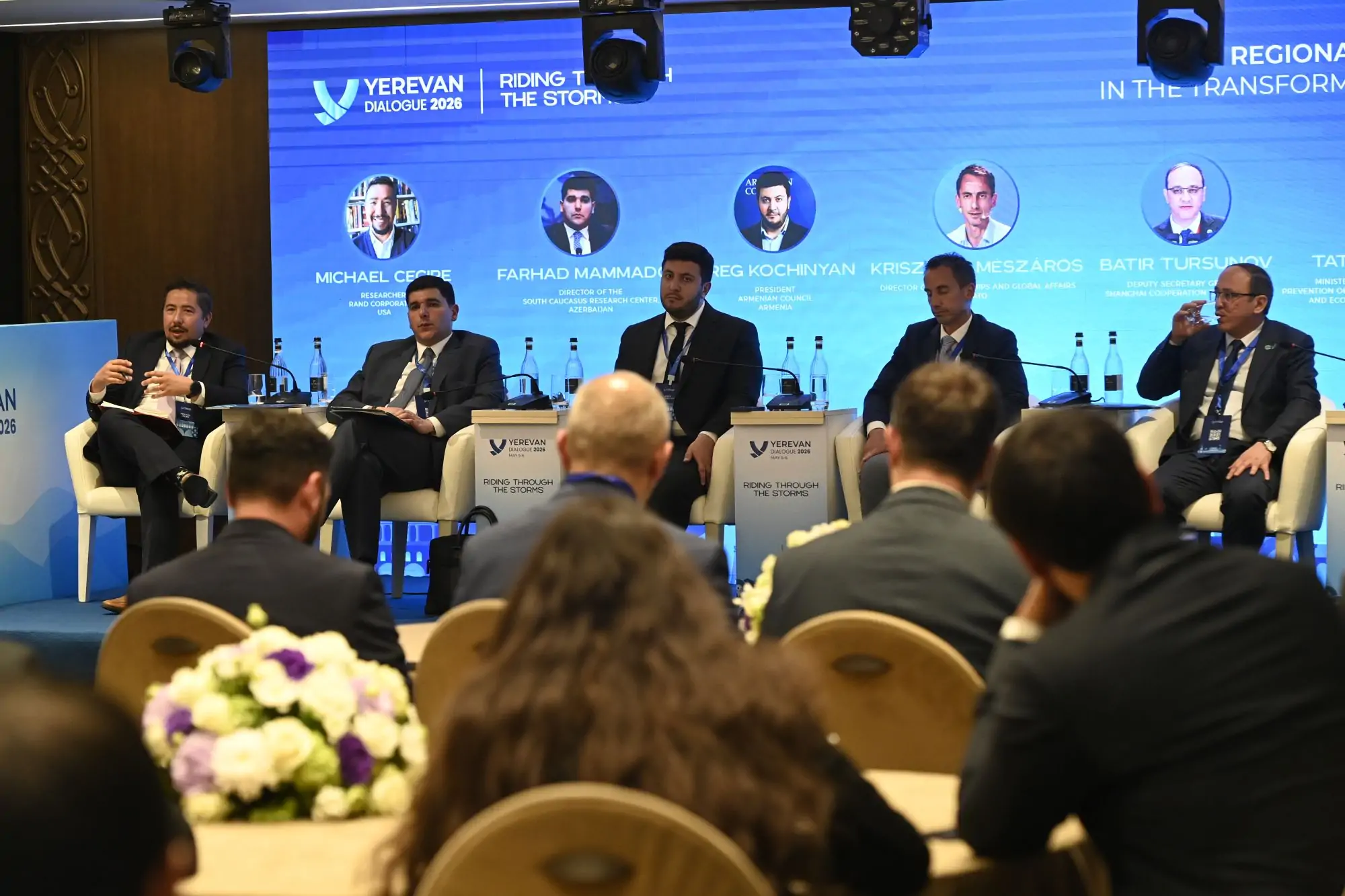
The panel discussion “Regional Subsystems as Shock Absorbers in the Transformation of the International System” was held within the framework of the Yerevan Dialogue 2026, bringing together policymakers and experts to reflect on structural changes in the global order.

The panel discussion was moderated by Rachel Rizzo, Senior Fellow of the Observer Research Foundation of the United States, and brought together Tatjana Macura, Minister in Charge of Gender Equality, Prevention of Home-Based Violence, and Political and Economic Empowerment of Women of Serbia, Batir Tursunov, Deputy Secretary General of the Shanghai Cooperation Organization, Krisztián Mészáros, Director of Partnerships and Global Affairs of NATO, Areg Kochinyan, President of the Armenian Council of Armenia, Farhad Mammadov, Director of the South Caucasus Research Center of Azerbaijan, and Michael Cecire, Researcher of the RAND Corporation of the United States.

The discussion analyzed the ongoing transformation of the international system, marked by intensifying great-power competition, the erosion of multilateral consensus, and the increasing use of economic tools for geopolitical purposes. Participants considered whether these developments reflect the emergence of a new world order, a reversion to traditional power politics, or a transitional phase between competing models of global governance.

Particular attention was devoted to the role of regional subsystems as mechanisms for managing instability, mitigating external pressures, and adapting to shifting geopolitical conditions. Participants emphasized that regional frameworks can function as platforms for coordination, policy experimentation, and resilience in the absence of strong global consensus. The discussion concluded that in an increasingly fragmented and rapidly evolving international environment, regional cooperation structures play a critical role in absorbing shocks, shaping localized responses, and contributing to broader systemic stability.

Financing the Green Transition: Just, Affordable, and Inclusive Energy Transitions as Means of Achieving Energy Security

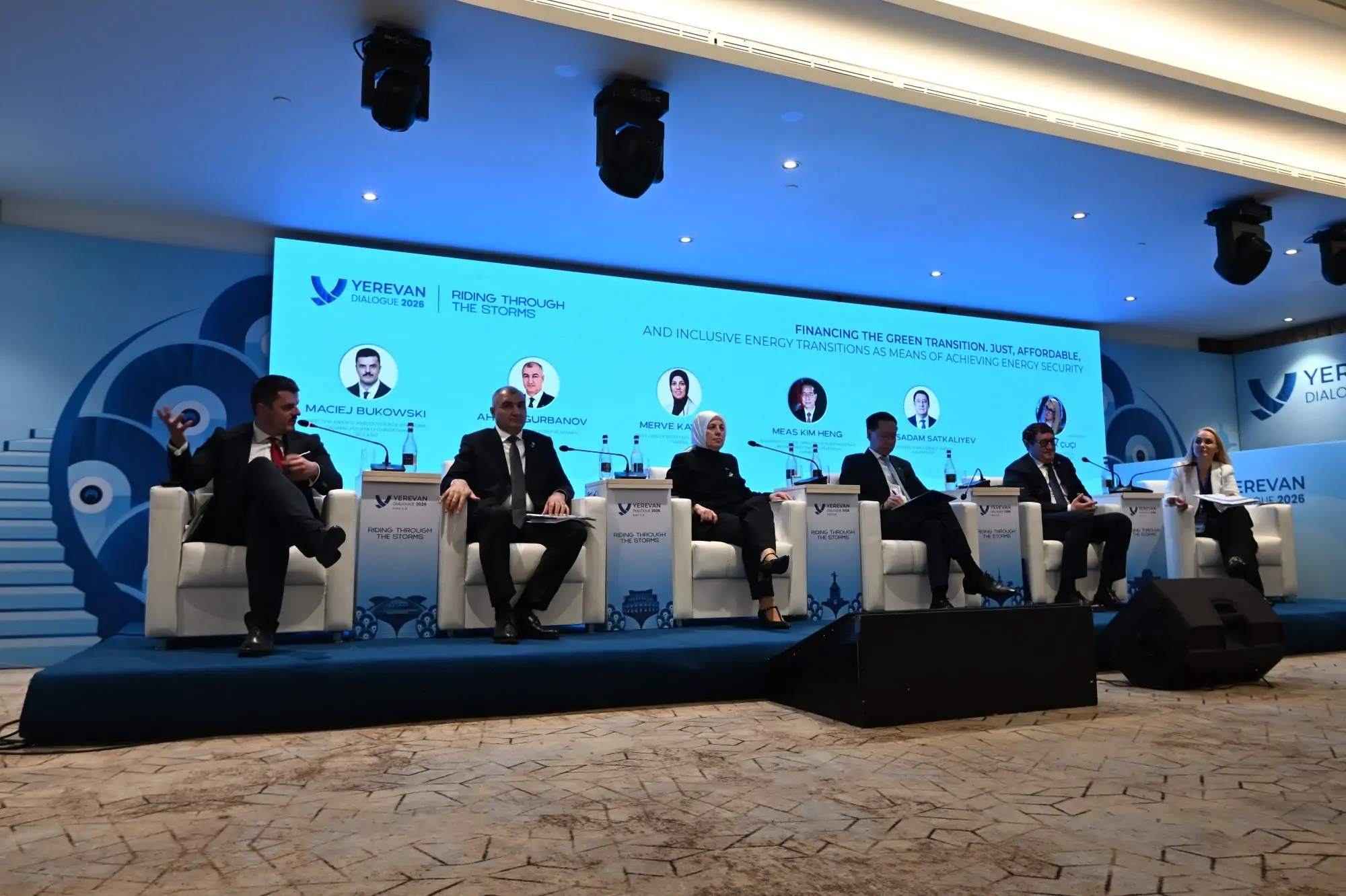
Within the framework of the Yerevan Dialogue 2026, the panel discussion “Financing the Green Transition: Just, Affordable, and Inclusive Energy Transitions as Means of Achieving Energy Security” assembled policymakers and experts to analyze the evolving challenges and opportunities of the global energy transition.

The panel discussion was moderated by Ornela Çuçi, Head of the Research Center of Western Balkan University of Albania, and brought together Almassadam Satkaliyev, Chairman of the Atomic Energy Agency of Kazakhstan, Meas Kim Heng, Secretary of State of the Ministry of Foreign Affairs and International Cooperation of Cambodia, Ahmet Gurbanov, Deputy Minister of Foreign Affairs of Turkmenistan, Merve Kavakçı, First Deputy Secretary General of BSEC of Türkiye, and Maciej Bukowski, Director of the Energy and Resilience Program of the Casimir Pulaski Foundation of Poland. 

The discussion examined the growing urgency of transitioning to sustainable energy systems in the context of climate pressures, geopolitical uncertainty, and rising global demand. Particular attention was devoted to the complex challenges faced by developing countries in ensuring access to reliable and affordable energy while advancing decarbonization and environmental protection.

Participants emphasized that energy security today extends beyond the stability of supply to encompass affordability, sustainability, and inclusiveness. The discussion also explored the financing mechanisms, international cooperation frameworks, and policy instruments required to support a balanced and equitable energy transition. The panel concluded that achieving long-term energy security necessitates coordinated global efforts, increased investment, and inclusive strategies that address both environmental and socio-economic dimensions of the transition.

Unlocking the South Caucasus – New Economic Horizons (co-hosted by Enterprise Armenia and Concordia)

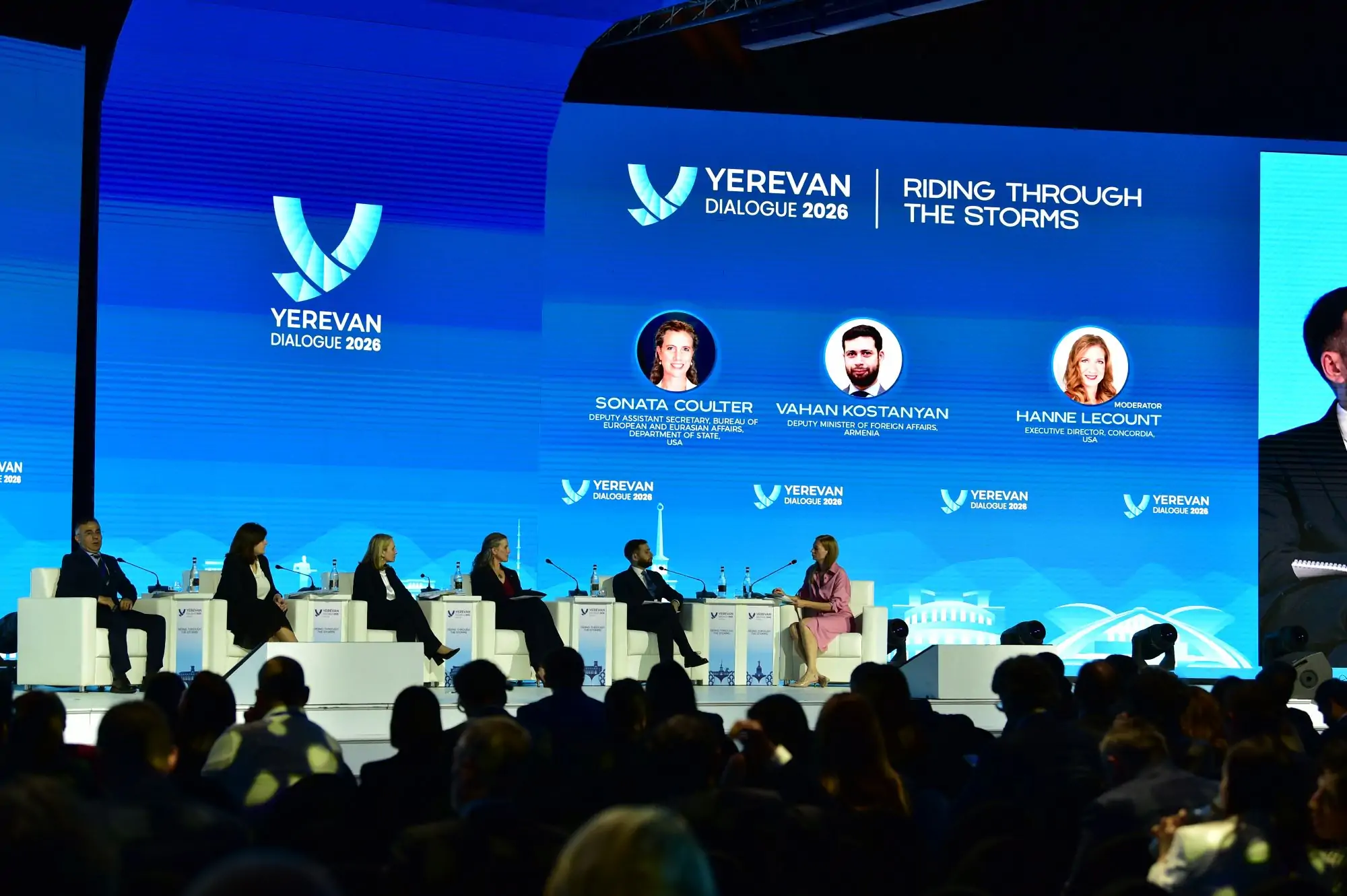
The panel discussion “Unlocking the South Caucasus – New Economic Horizons” took place within the framework of the Yerevan Dialogue 2026, co-hosted by Enterprise Armenia and Concordia, bringing together policymakers and experts to explore emerging economic opportunities in the region.

The panel discussion was moderated by Hanne LeCount, Executive Director of Concordia of the United States, and brought together Vahan Kostanyan, Deputy Minister of Foreign Affairs of Armenia, Sonata Coulter, Deputy Assistant Secretary of the Bureau of European and Eurasian Affairs of the Department of State of the United States, Adrienn Kiraly, Director for Neighborhood East and Türkiye of the Directorate-General for Enlargement and Eastern Neighbourhood of the European Commission, Mzia Giorgobiani, Deputy Minister of Infrastructure of Georgi, and Murat Aslan, Senior Researcher of SETA of Türkiye. 

The discussion examined the South Caucasus as an increasingly important space for economic cooperation and regional connectivity, with a focus on infrastructure development, trade facilitation, and economic integration. Participants analyzed how evolving geopolitical dynamics are creating new opportunities for investment and cross-border collaboration.

Particular attention was devoted to Armenia’s emerging role as a regional hub linking Europe and Asia, alongside large-scale infrastructure and connectivity initiatives aimed at strengthening economic integration. Participants emphasized that such projects can enhance long-term stability by promoting interdependence and shared economic interests. The discussion concluded that unlocking the region’s economic potential requires coordinated efforts, investment-friendly policies, and sustained engagement among regional and international stakeholders.

AI Sovereignty and Scale: Governing Frontier Technologies in a Competitive World

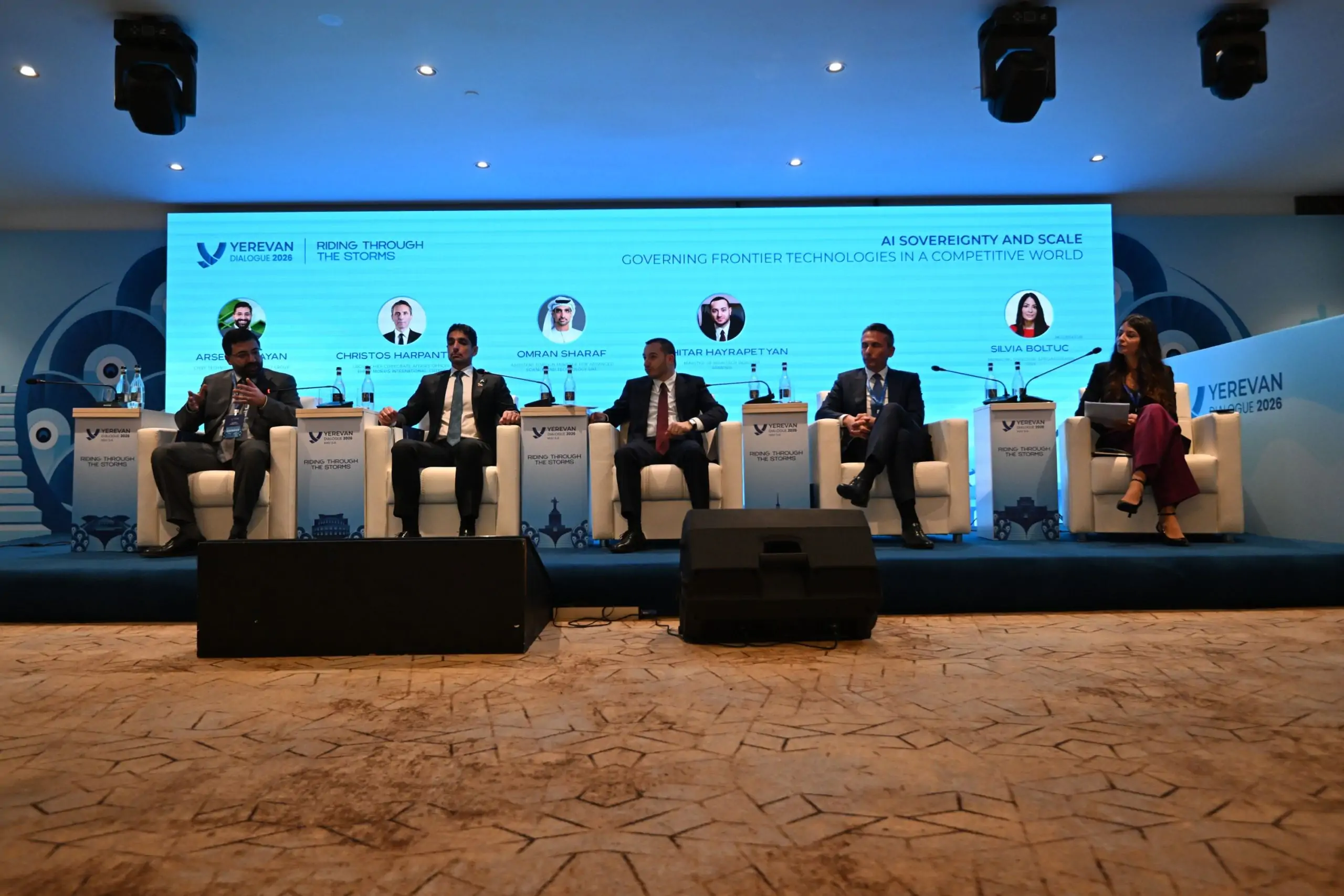
The panel discussion “AI Sovereignty and Scale: Governing Frontier Technologies in a Competitive World” was held within the framework of the Yerevan Dialogue 2026, bringing together policymakers and industry representatives to examine the growing strategic significance of artificial intelligence.

The discussion focused on the transformation of AI from a primarily technical domain into a central element of economic security, state capacity, and geopolitical competition. Participants explored the expanding role of governments not only as regulators, but also as active stakeholders shaping AI ecosystems through investment, deployment, and policy frameworks.

The panel discussion was moderated by Silvia Boltuc, Managing Director of Special Eurasia of Italy, and brought together Mkhitar Hayrapetyan, Minister of High-Tech Industry of Armenia, Omran Sharaf, Assistant Foreign Minister for Advanced Science and Technology of the United Arab Emirates, Christos Harpantidis, Group Chief Corporate Affairs Officer of Philip Morris International of Greece, and Arsen Babayan, Chief Technology Officer of Ineco Group of Armenia. 

Particular attention was given to the concept of AI sovereignty, including the capacity of states to develop, control, and govern advanced technologies in line with national priorities. Participants also discussed the challenges of scaling AI systems responsibly, ensuring ethical standards, and balancing innovation with regulatory oversight.

The discussion underscored that effective governance of frontier technologies requires coordinated approaches that integrate public and private sector efforts, while maintaining competitiveness and adherence to international norms.