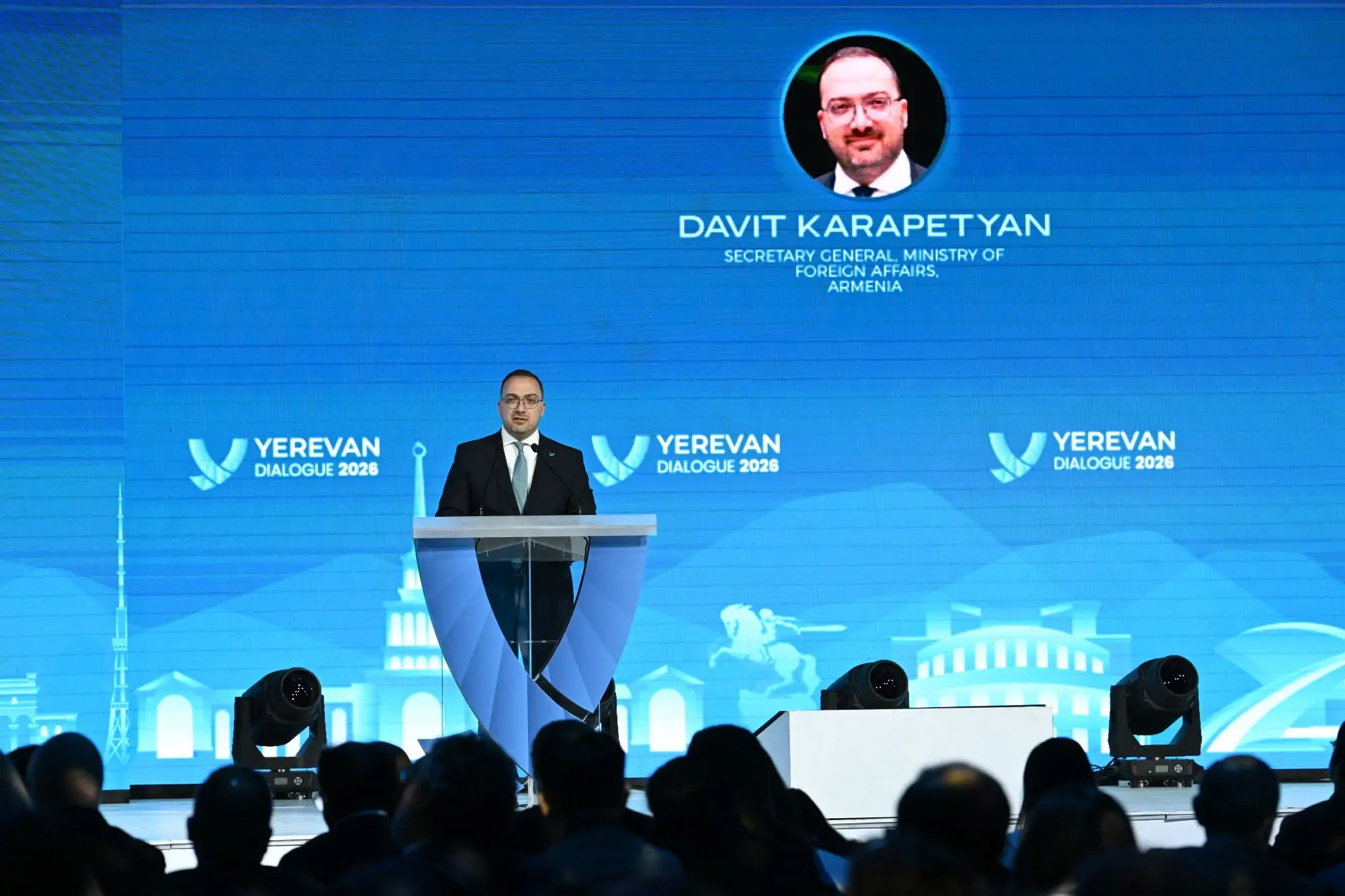
Closing Remarks & Vote of Thanks

The 3rd edition of the Yerevan Dialogue 2026 under the theme “Riding Through the Storms” concluded in Yerevan.

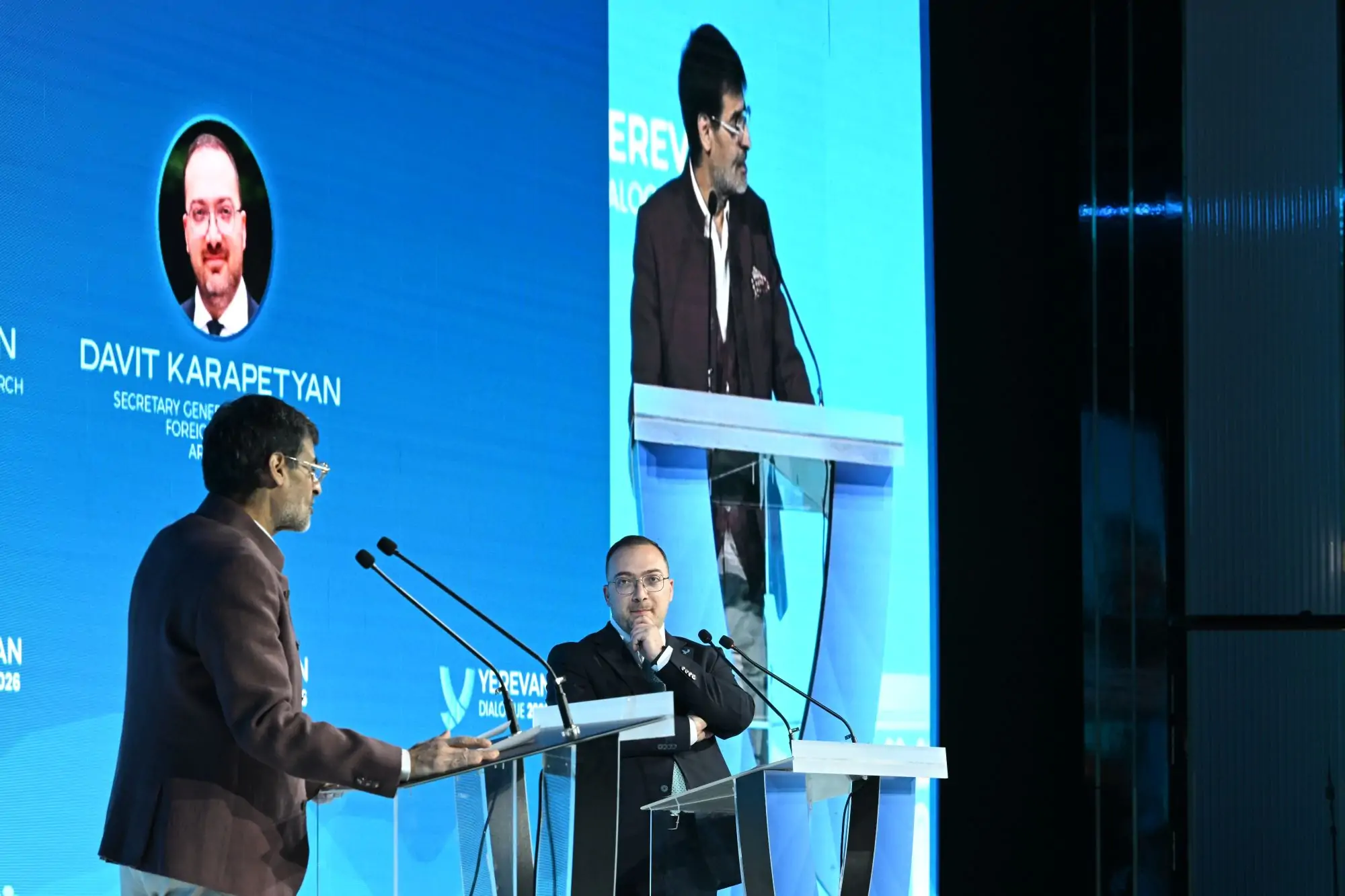
In his closing remarks, Davit Karapetyan, Secretary General of the Ministry of Foreign Affairs of Armenia, emphasized that the current international environment is marked by growing geopolitical fragmentation, technological disruption, and mounting pressure on global governance systems, though the discussions demonstrated the importance of resilience, dialogue, and cooperation in addressing shared global challenges.

He noted that fragmentation should not be viewed as inevitable, but rather as a condition that can be addressed through collective action and sustained engagement. He also emphasized that the South Caucasus is increasingly emerging not merely as a space between competing powers, but as a region with the potential to shape broader regional and international processes.

During the closing remarks, appreciation was expressed to the international partners and organizations supporting the forum, including the Observer Research Foundation, Concordia, Casimir Pulaski Foundation, GLOBSEC, the French CAPS, the German Marshall Fund, Bled Strategic Forum, the Delphi Economic Forum, the Forum on Information and Democracy, and the GlobalFocus Center, as well as to institutional and private sector partners contributing to the organization of the event.

Concluding the forum, Karapetyan reaffirmed Armenia’s commitment to multilateral dialogue, international cooperation, and constructive engagement, emphasizing the importance of translating discussions into practical action and long-term partnerships.

Curators Call Session

Bringing together diplomatic, policy, and intellectual perspectives from different regions, the 3rd edition of the Yerevan Dialogue 2026 is curated by Davit Karapetyan, Secretary General of the Ministry of Foreign Affairs of Armenia, and Samir Saran, President of the Observer Research Foundation of India. Their collaboration reflects the forum’s broader ambition to connect regional and global perspectives while encouraging forward-looking discussions on the major transformations shaping the international landscape.

Davit Karapetyan highlighted the role of the Yerevan Dialogue in promoting constructive engagement on issues ranging from connectivity and democratic resilience to technological transformation and regional stability.

Samir Saran underlined the growing need for forward-looking international cooperation in addressing complex global challenges, including emerging technologies, climate pressures, and shifts in the global balance of power. 

Building on the achievements of previous editions, the forum continues to strengthen its role as a platform for inclusive dialogue and forward-looking cooperation and to provide a space for diverse actors to exchange perspectives, encourage coordinated responses, and reinforce regional and international cooperation in addressing the evolving complexities of an increasingly interconnected global landscape.

The Right to Reliable Information in the Period of Elections

As part of Yerevan Dialogue 2026, a closed-door discussion on “The Right to Reliable Information in the Period of Elections” was held in partnership with the Forum on Information and Democracy.

The session brought together high-level officials, ambassadors, and experts, including Davit Karapetyan, Secretary General of the Ministry of Foreign Affairs of the Republic of Armenia, to exchange views on safeguarding access to reliable information during electoral periods. Discussions addressed the challenges of misinformation and disinformation, highlighting the importance of transparency, institutional resilience, and international cooperation in protecting democratic processes.

Advancing Synergies across Rio Conventions

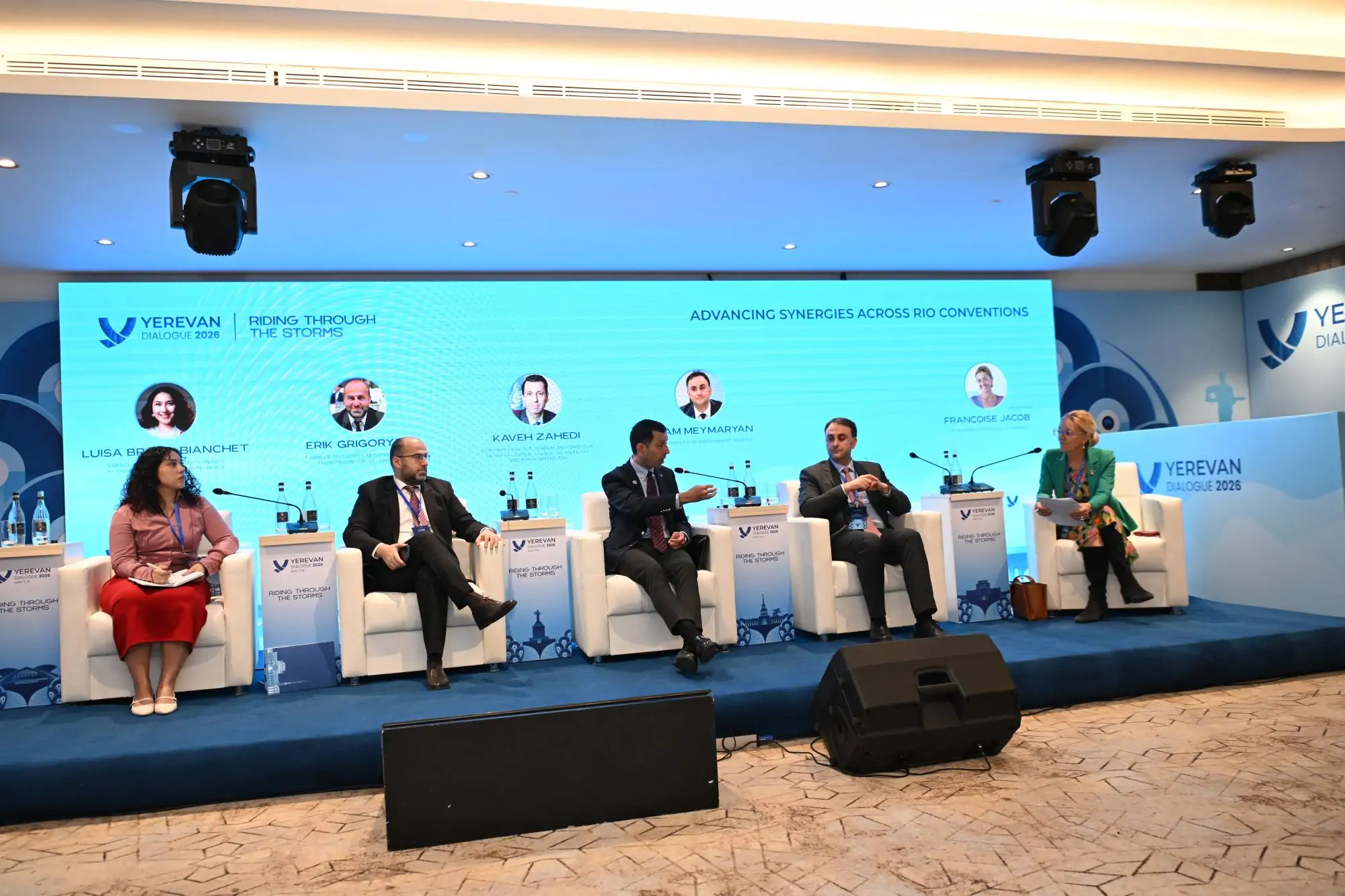
Integrated approaches to climate, biodiversity, and land degradation challenges were at the center of the panel discussion “Advancing Synergies across Rio Conventions,” held within the framework of the Yerevan Dialogue 2026. The session brought together policymakers and experts to explore ways of strengthening coordination across major international environmental frameworks.

The discussion was moderated by Françoise Jacob, United Nations Resident Coordinator in Armenia, and featured Aram Meymaryan, Deputy Minister of Environment of Armenia, Kaveh Zahedi, Assistant Director-General and Director of the Office of Climate Change, Biodiversity and Environment of the Food and Agriculture Organization, Erik Grigoryan, Founder and Chief Executive Officer of Environment Group of Armenia, and Luísa Braga Bianchet, Energy Transition Diplomacy Analyst of the E+ Energy Transition Institute of Brazil.

Participants examined the importance of strengthening coordination among the three major international environmental agreements — the United Nations Framework Convention on Climate Change, the Convention on Biological Diversity, and the United Nations Convention to Combat Desertification — while emphasizing the interconnected nature of climate change, biodiversity loss, and land degradation.

Particular attention was devoted to identifying cross-sectoral priorities and enhancing cooperation among governments, international organizations, and non-governmental stakeholders. Participants discussed the importance of coordinated policy frameworks and shared implementation mechanisms in responding to interconnected environmental challenges.

The discussion underscored that effectively addressing global environmental crises requires integrated action, stronger collaboration, and greater alignment across international frameworks in order to achieve sustainable and long-term outcomes.

EU’s Enlargement Shift for the South Caucasus (co-hosted by GLOBSEC)

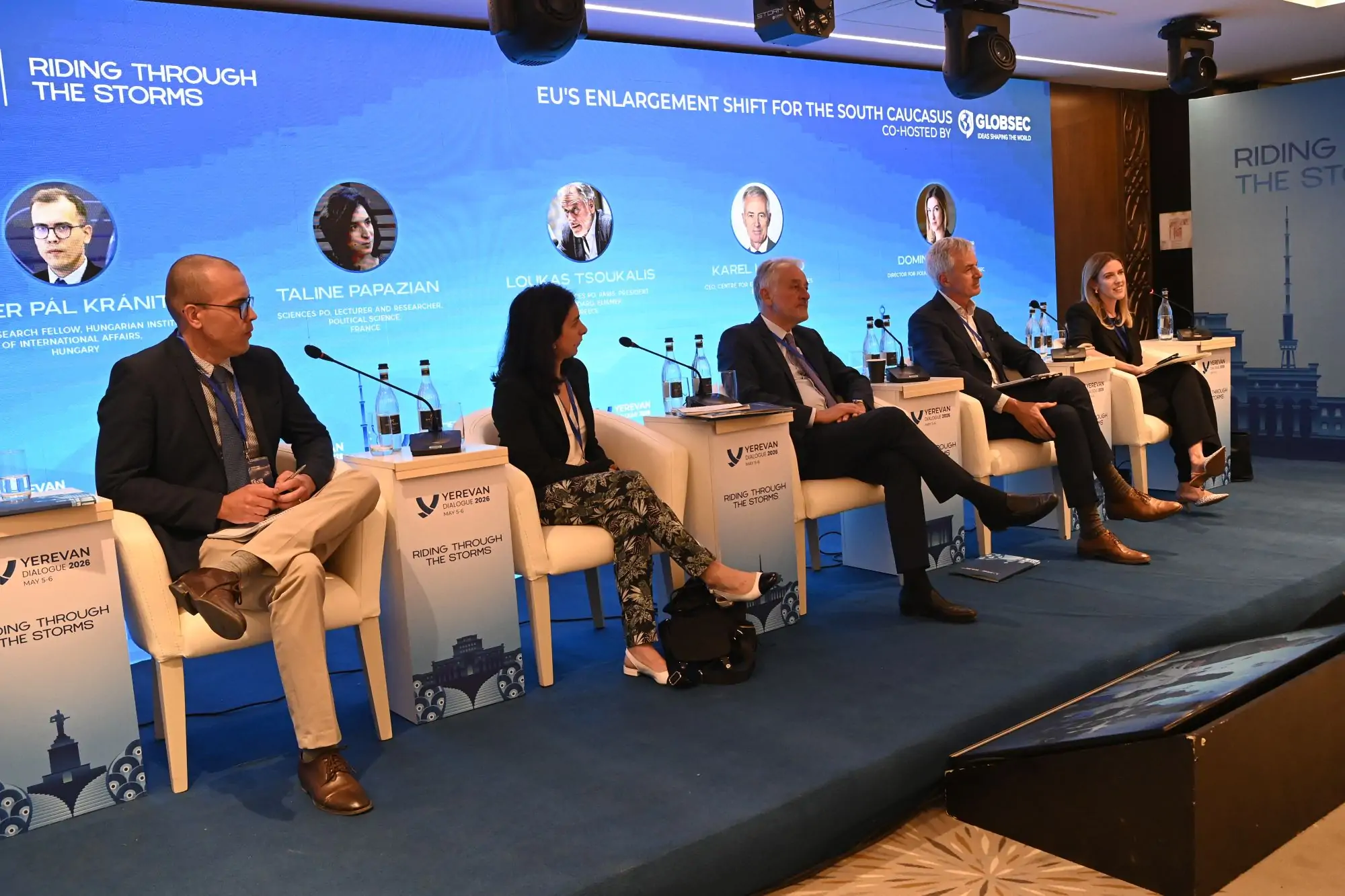
The evolving approach of the European Union toward the South Caucasus and the future of regional integration were the focus of the panel discussion “EU’s Enlargement Shift for the South Caucasus,” held within the framework of the Yerevan Dialogue 2026 and co-hosted by GLOBSEC. The session brought together experts to examine changing EU policies and their implications for the region.

The discussion was moderated by Dominika Hajdu, Director for Policy and Programming of GLOBSEC of Slovakia, and featured Karel Lannoo, CEO of the Centre for European Policy Studies of Belgium, Loukas Tsoukalis, Professor at Sciences Po in Paris and President of the Board of ELIAMEP of Greece, Taline Papazian, Lecturer and Researcher in Political Science at Sciences Po of France, and Péter Pál Kránitz, Senior Research Fellow of the Hungarian Institute of International Affairs of Hungary.

Participants examined Armenia’s evolving relationship with the European Union, including ongoing reform efforts and increasing alignment with European standards. The discussion explored how broader geopolitical developments, alongside internal dynamics within the EU, may influence future approaches to enlargement and regional engagement.

Particular attention was devoted to the potential evolution of EU enlargement policy and its implications for the South Caucasus, including the emergence of differentiated integration models. Participants also discussed the balance between regulatory convergence, market access, and political integration in shaping future frameworks of cooperation.

The discussion underscored that the European Union’s future approach toward the region will play an important role in shaping prospects for integration, reform, and long-term stability across the South Caucasus.