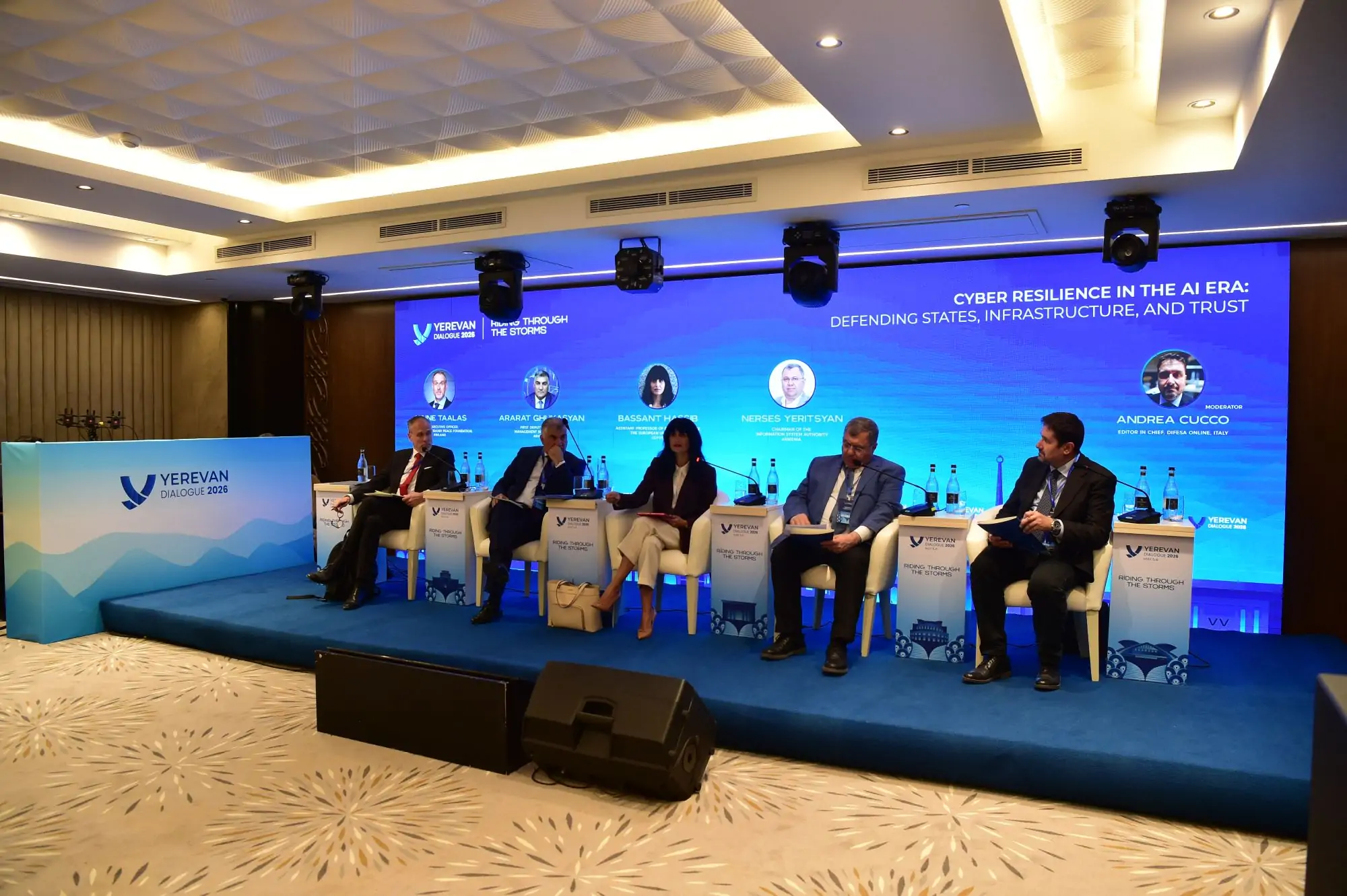
Cyber Resilience in the AI Era: Defending States, Infrastructure, and Trust

As artificial intelligence increasingly reshapes both digital infrastructure and global security dynamics, the panel discussion “Cyber Resilience in the AI Era: Defending States, Infrastructure, and Trust,” held within the framework of the Yerevan Dialogue 2026, explored the emerging challenges and vulnerabilities facing states, institutions, and societies in the digital age.

The session was moderated by Andrea Cucco, Editor in Chief of Difesa Online of Italy, and featured Nerses Yeritsyan, Chairman of the Information System Regulatory Commission of Armenia, Bassant Hassib, Assistant Professor of Political Science of The European Universities of Egypt, Ararat Ghukasyan, First Deputy Chairman of the Management Board of Unibank of Armenia, and Janne Taalas, Chief Executive Officer of CMI – Martti Ahtisaari Peace Foundation of Finland.

Participants discussed the growing interconnection between cybersecurity, economic stability, and national security amid the expanding digitalization of public institutions and critical infrastructure. Particular focus was placed on the transformative impact of artificial intelligence on both defensive systems and evolving threat landscapes, including increasingly sophisticated cyber risks such as ransomware attacks, data breaches, and large-scale systemic disruptions.

The discussion also addressed the widening attack surface created by digital transformation and the expanding role of cyber capabilities within geopolitical competition. Participants emphasized the importance of resilience-oriented approaches, including institutional preparedness, stronger public-private cooperation, and enhanced international coordination in responding to emerging cyber threats.

The panel concluded that strengthening cyber resilience is becoming essential not only for protecting infrastructure and digital systems, but also for maintaining public trust and ensuring stability in an increasingly interconnected and contested digital environment.

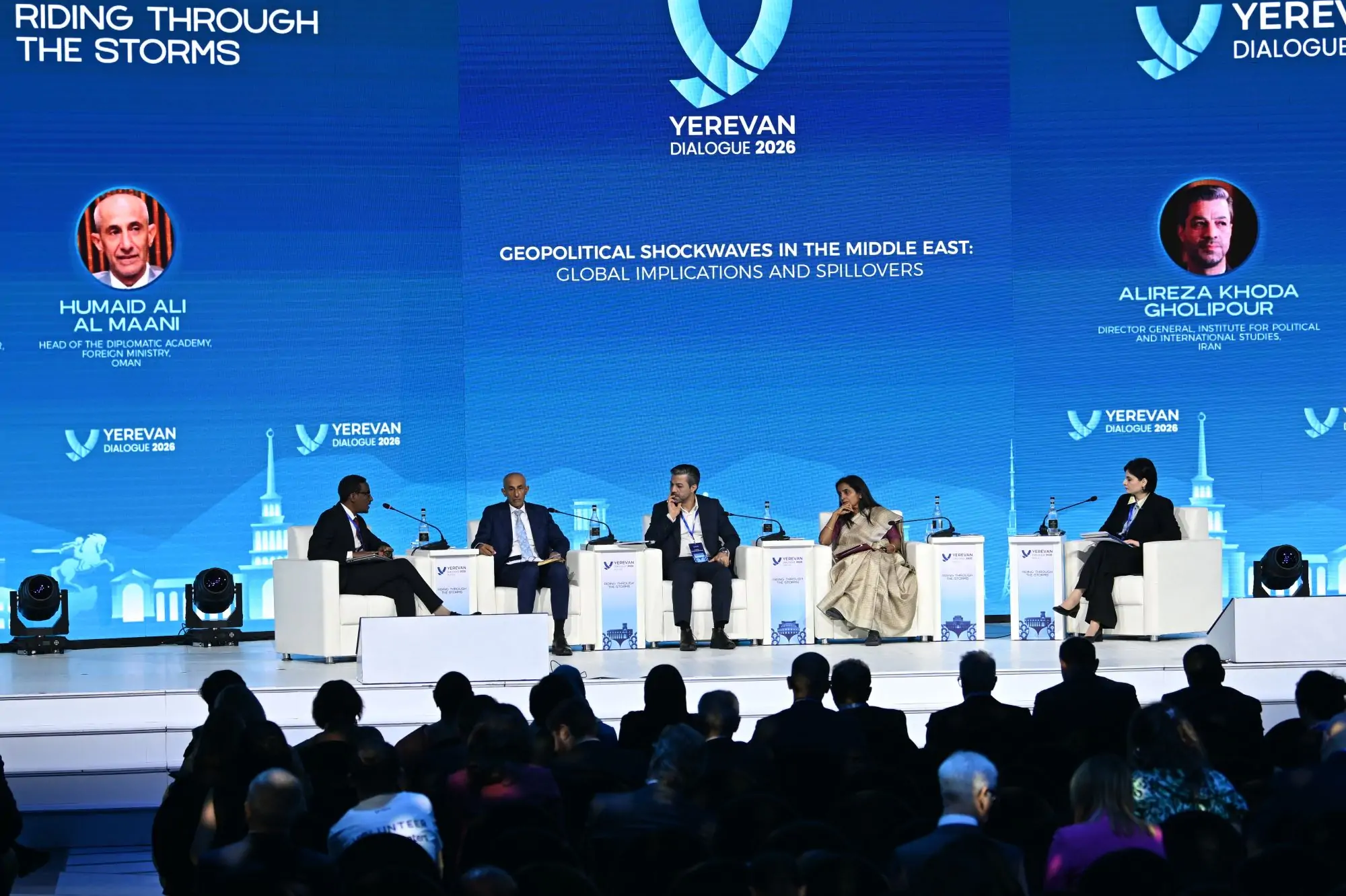
Geopolitical Shockwaves in the Middle East: Global Implications and Spillovers

The broader international consequences of escalating tensions in the Middle East were at the center of the panel discussion “Geopolitical Shockwaves in the Middle East: Global Implications and Spillovers,” held within the framework of the Yerevan Dialogue 2026. The session brought together international experts to assess the geopolitical, economic, and security implications of recent developments across the region.

Discussions focused on the far-reaching impact of instability in the Middle East on global energy markets, trade routes, and geopolitical balances. Participants highlighted the strategic significance of key maritime corridors, particularly the Strait of Hormuz, and examined the potential consequences that disruptions could have for global economic stability and international commerce.

The panel was moderated by Anna Davtyan-Gevorgyan, Researcher of the Center for Culture and Civilization Studies of Armenia, and featured Sripriya Ranganathan, Secretary for Consular, Passport, Visa and Overseas Indian Affairs of the Ministry of External Affairs of India, Alireza Khoda Gholipour, Director General of the Institute for Political and International Studies of Iran, Humaid Ali Al Maani, Head of the Diplomatic Academy of the Foreign Ministry of Oman, and Aweke Amare Kenaw, Director General and Lead Researcher for Middle East and Asia-Pacific Affairs of the Institute of Foreign Affairs of Ethiopia.

Particular attention was devoted to the spillover effects of the crisis on neighboring regions, including the South Caucasus, where evolving geopolitical dynamics may influence regional connectivity, energy cooperation, and broader stability. Participants also discussed the wider implications for trade routes, security arrangements, and the role of major powers in shaping regional developments.

The discussion underscored that developments in the Middle East continue to generate significant global repercussions, highlighting the importance of careful monitoring, coordinated responses, and sustained international engagement aimed at mitigating risks and preserving stability across interconnected regions.

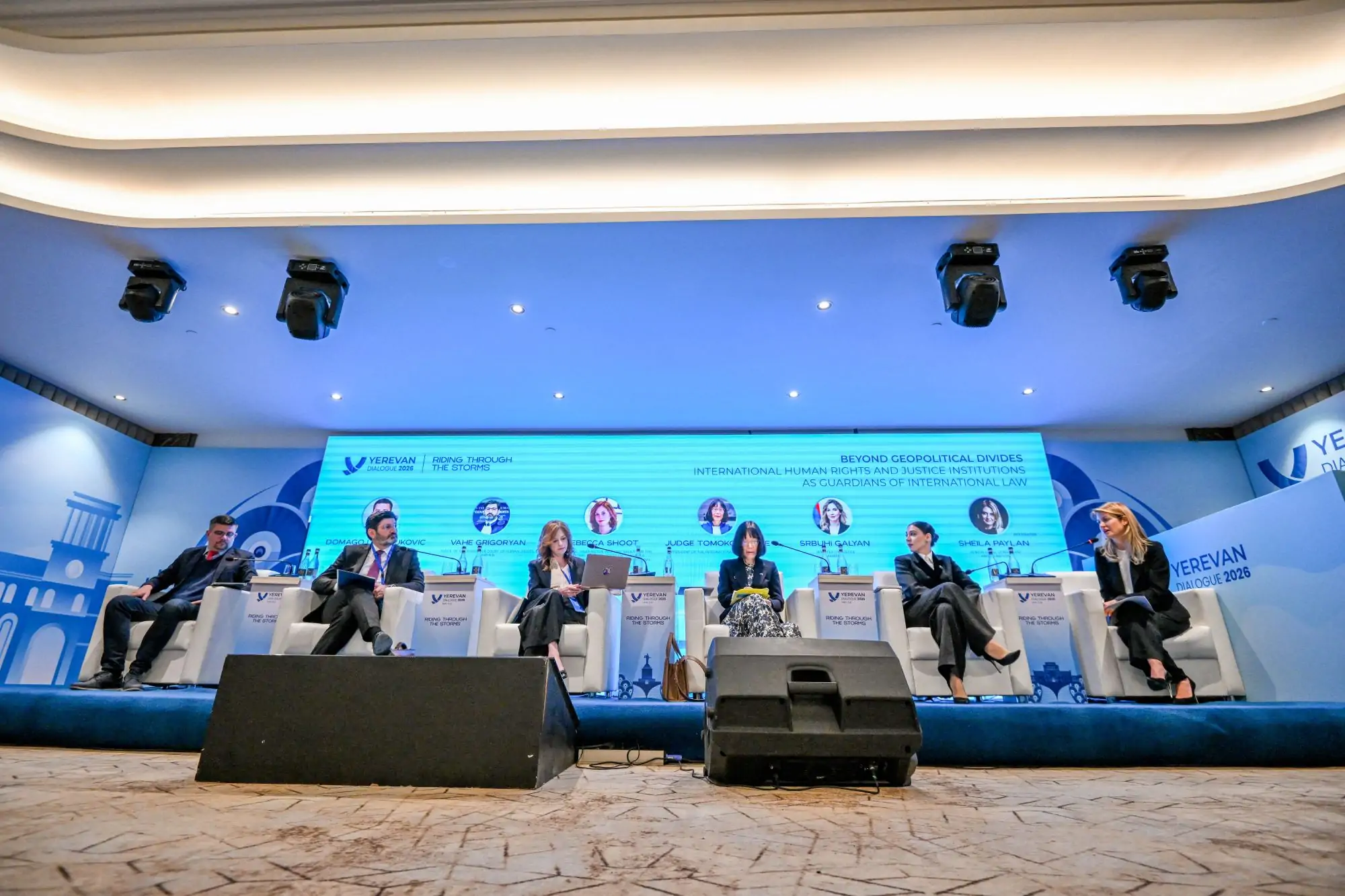
Beyond Geopolitical Divides: International Human Rights and Justice Institutions as Guardians of International Law

The evolving role of international justice and human rights institutions in an increasingly fragmented global environment was at the center of the panel discussion “Beyond Geopolitical Divides: International Human Rights and Justice Institutions as Guardians of International Law,” held within the framework of the Yerevan Dialogue 2026.

The discussion focused on the growing pressures facing international human rights and judicial institutions amid rising geopolitical tensions, declining confidence in multilateral frameworks, and ongoing challenges related to enforcement and compliance. Participants explored how these institutions continue to function as essential mechanisms of accountability, while also addressing concerns regarding their effectiveness and politicization.

The session was moderated by Sheila Paylan, Senior Legal Consultant of the United Nations, and featured Srbuhi Galyan, Minister of Justice of Armenia, Tomoko Akane, President of the International Criminal Court, Rebecca Shoot, Co-Convener of the Washington Working Group for the International Criminal Court and Co-Convener of the ImPact Coalition on Strengthening International Judicial Institutions of the United States, Vahe Grigoryan, Judge of the European Court of Human Rights of Armenia, and Domagoj Hajdukovic, President of the Centre for International Relations of Croatia.

Particular attention was devoted to the role of institutions such as the United Nations, the International Court of Justice, the International Criminal Court, and the European Court of Human Rights in upholding international legal norms and responding to violations within an increasingly fragmented international system.

The discussion emphasized the importance of strengthening international legal frameworks not only as mechanisms of accountability, but also as tools for conflict prevention and long-term stability. Participants highlighted the need for institutional reform, stronger international cooperation, and renewed commitment to the fundamental principles of international law.

From Connectivity to Opportunity: Boosting EU–Armenia Trade and Investment (co-hosted by Enterprise Armenia and Delphi Economic Forum)

Economic connectivity and deeper EU – Armenia cooperation were at the center of the panel discussion “From Connectivity to Opportunity: Boosting EU – Armenia Trade and Investment,” held within the framework of the Yerevan Dialogue 2026 and co-hosted by Enterprise Armenia and the Delphi Economic Forum. The discussion focused on Armenia’s expanding role in regional trade, investment, and connectivity networks linking Europe and the wider region.

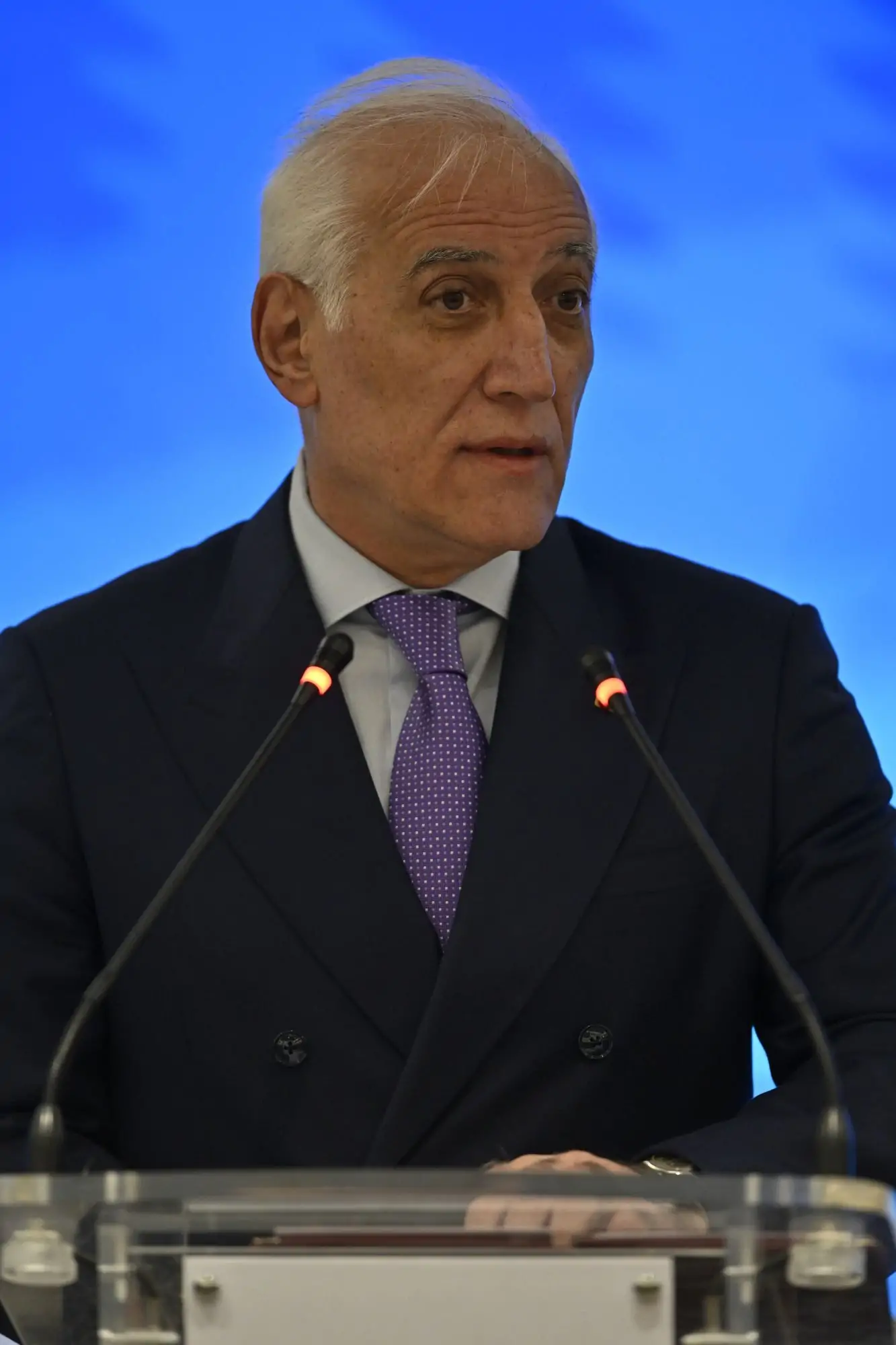
The panel was moderated by Symeon Tsomokos, Founder and President of the Delphi Economic Forum of Greece, while the keynote address was delivered by Vahagn Khachaturyan, the President of Armenia. Participants included Dimitris Skalkos, Secretary General of the Ministry of Foreign Affairs of Greece, Viktorya Aydinyan, Head of the Office of the Deputy Prime Minister of Armenia, Sarkis Dagkazian, President of the Hellenic-Armenian Chamber of Commerce and Industry of Greece, Oana Popescu-Zamfir, Director of the GlobalFocus Center of Romania, and Tigran Mkhitaryan, Member of the Management Board of “Fast Bank” CJSC of Armenia.

Participants explored Armenia’s ongoing efforts to harmonize its regulatory environment with European standards and examined how infrastructure development initiatives and economic reforms can support deeper integration into European and global value chains. Discussions also focused on the importance of connectivity projects, regulatory convergence, and trade facilitation measures in strengthening economic cooperation with the European Union.

Particular attention was given to opportunities for export diversification, attracting foreign investment, and promoting value-added economic growth. The discussion emphasized that stronger EU – Armenia economic relations will depend on coordinated efforts capable of translating policy frameworks into tangible economic outcomes, contributing to a more competitive, resilient, and integrated partnership.

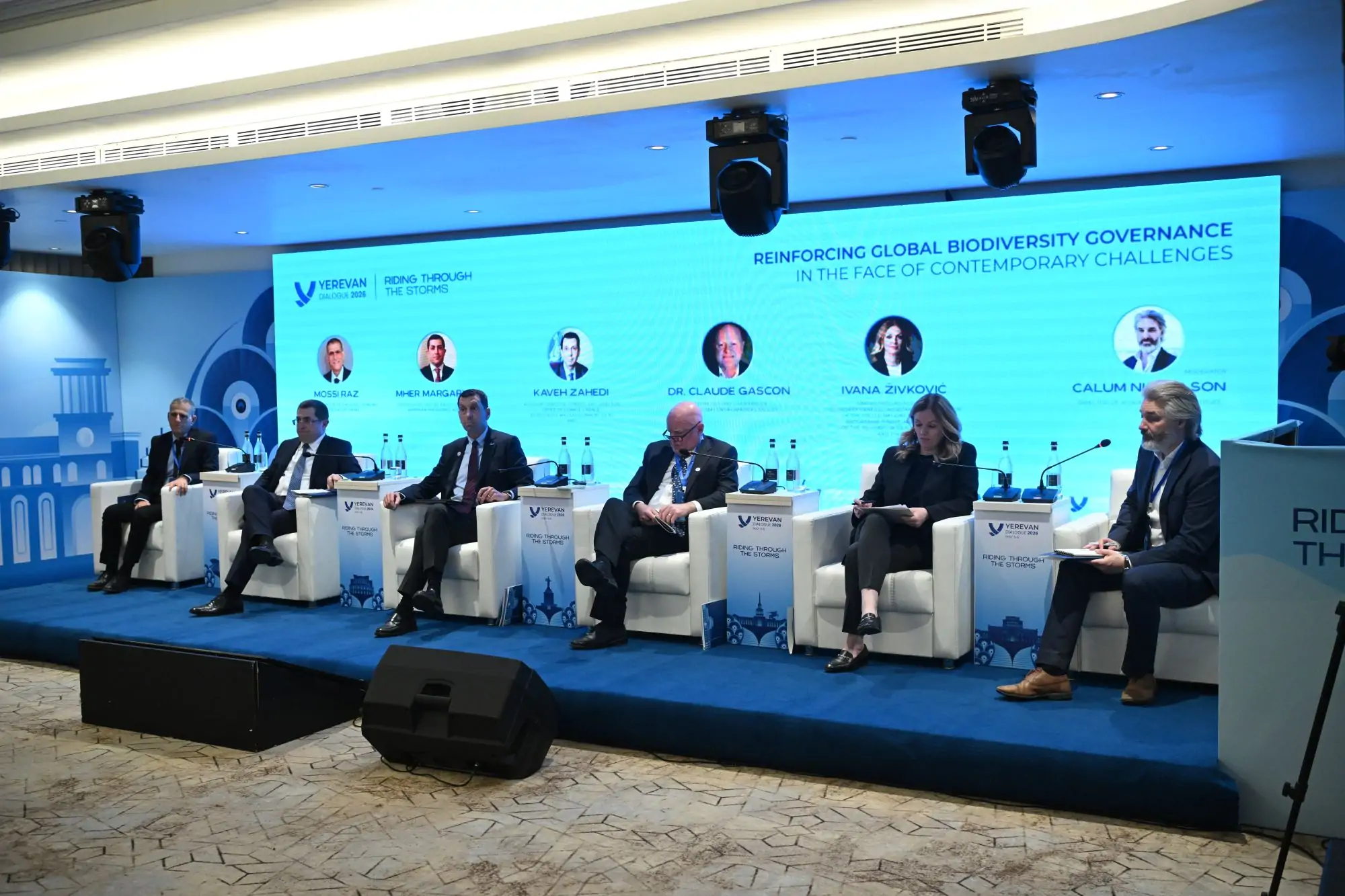
Reinforcing Global Biodiversity Governance in the Face of Contemporary Challenges

Against the backdrop of mounting global environmental pressures and in the lead-up to COP17 of the Convention on Biological Diversity, the high-level meeting “Reinforcing Global Biodiversity Governance in the Face of Contemporary Challenges,” held within the framework of the Yerevan Dialogue 2026, focused on the urgent need to strengthen international biodiversity governance and accelerate implementation efforts.

The session was moderated by Calum Nicholson, Director of Research of the Danube Institute of the United Kingdom. The keynote address was delivered by Hambardzum Matevosyan, Minister of Environment of Armenia. The panel also featured Ivana Živković, United Nations Assistant Secretary-General, Assistant Administrator of the United Nations Development Programme, and Director of the Regional Bureau for Europe and the CIS; Kaveh Zahedi, Assistant Director-General and Director of the Office of Climate Change, Biodiversity and Environment of the Food and Agriculture Organization; Mher Margaryan, Ambassador and Special Envoy of the COP17 Armenian Presidency of Armenia; and Mossi Raz, Former Chairperson of the Israel–Armenia Friendship Group of Israel.

The discussion addressed the intensifying global biodiversity crisis, characterized by accelerating ecosystem degradation, growing species loss, and increasing pressure on essential ecosystem services. Participants emphasized that these trends threaten not only environmental sustainability, but also economic development, food security, public health, livelihoods, and broader global stability. While recognizing progress achieved through the adoption of the Kunming–Montreal Global Biodiversity Framework (KMGBF), participants noted that global efforts to halt biodiversity loss remain insufficient due to persistent implementation gaps, unequal access to financial resources, and the growing effects of geopolitical fragmentation on international cooperation.

Particular attention was devoted to the challenge of transforming biodiversity commitments into concrete and measurable outcomes. Discussions focused on strengthening implementation mechanisms, enhancing international coordination, and mobilizing adequate financial support in order to accelerate progress toward global biodiversity targets by 2030. Participants also highlighted the importance of the first Global Review under the KMGBF as a mechanism for identifying gaps and improving implementation efforts.

The discussion further emphasized Armenia’s role as host and incoming Presidency of COP17, particularly in advancing an implementation-oriented agenda and reinforcing multilateral cooperation ahead of the conference. Participants underscored that addressing biodiversity loss requires coordinated international action, renewed political commitment, and practical approaches capable of narrowing the gap between global ambition and effective implementation.