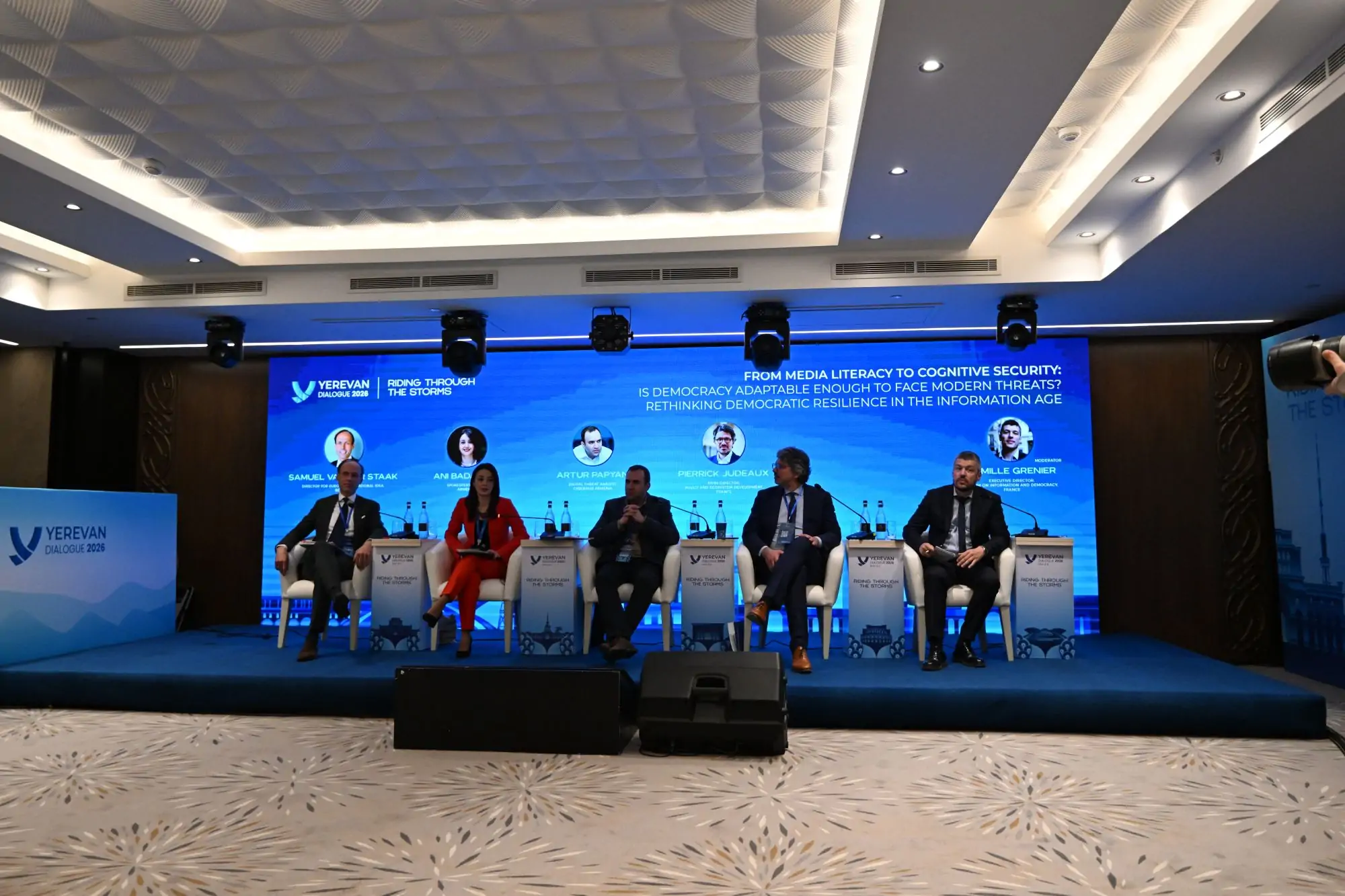
From Media Literacy to Cognitive Security: Is democracy adaptable enough to face modern threats? Rethinking democratic Resilience in the Information Age

As democratic societies face increasingly complex challenges in the digital age, the panel discussion “From Media Literacy to Cognitive Security: Is Democracy Adaptable Enough to Face Modern Threats? Rethinking Democratic Resilience in the Information Age,” held within the framework of the Yerevan Dialogue 2026, explored the evolving relationship between information security, technology, and democratic resilience.

The session was moderated by Camille Grenier, Executive Director of the Forum on Information and Democracy of France, and featured Ani Badalyan, Spokesperson of the Ministry of Foreign Affairs of Armenia; Artur Papyan, Digital Threat Analyst of CyberHUB Armenia; Pierrick Judeaux, IFPIM Director for Policy and Ecosystem Development of France; and Samuel Van der Staak, Director for Europe of International IDEA of Belgium.

The discussion examined the transformation of the contemporary information environment, where emerging threats such as Foreign Information Manipulation and Interference (FIMI) increasingly influence not only information flows, but also public perception, behavior, and decision-making processes. Participants explored how artificial intelligence, digital platforms, and data-driven technologies are reshaping interactions with information and affecting public discourse.

Particular attention was devoted to the shift from traditional media literacy toward the broader concept of cognitive security, emphasizing the importance of strengthening both individual and institutional resilience against manipulation within increasingly complex digital ecosystems. Participants also discussed the growing influence of AI-generated content, algorithmic amplification, and targeted data use on democratic processes and societal trust.

The discussion underscored the need for updated policy frameworks capable of responding to these evolving challenges while preserving democratic principles, freedom of expression, and open information environments. Participants concluded that strengthening democratic resilience requires a comprehensive approach that combines technological innovation, regulatory measures, and greater societal awareness.

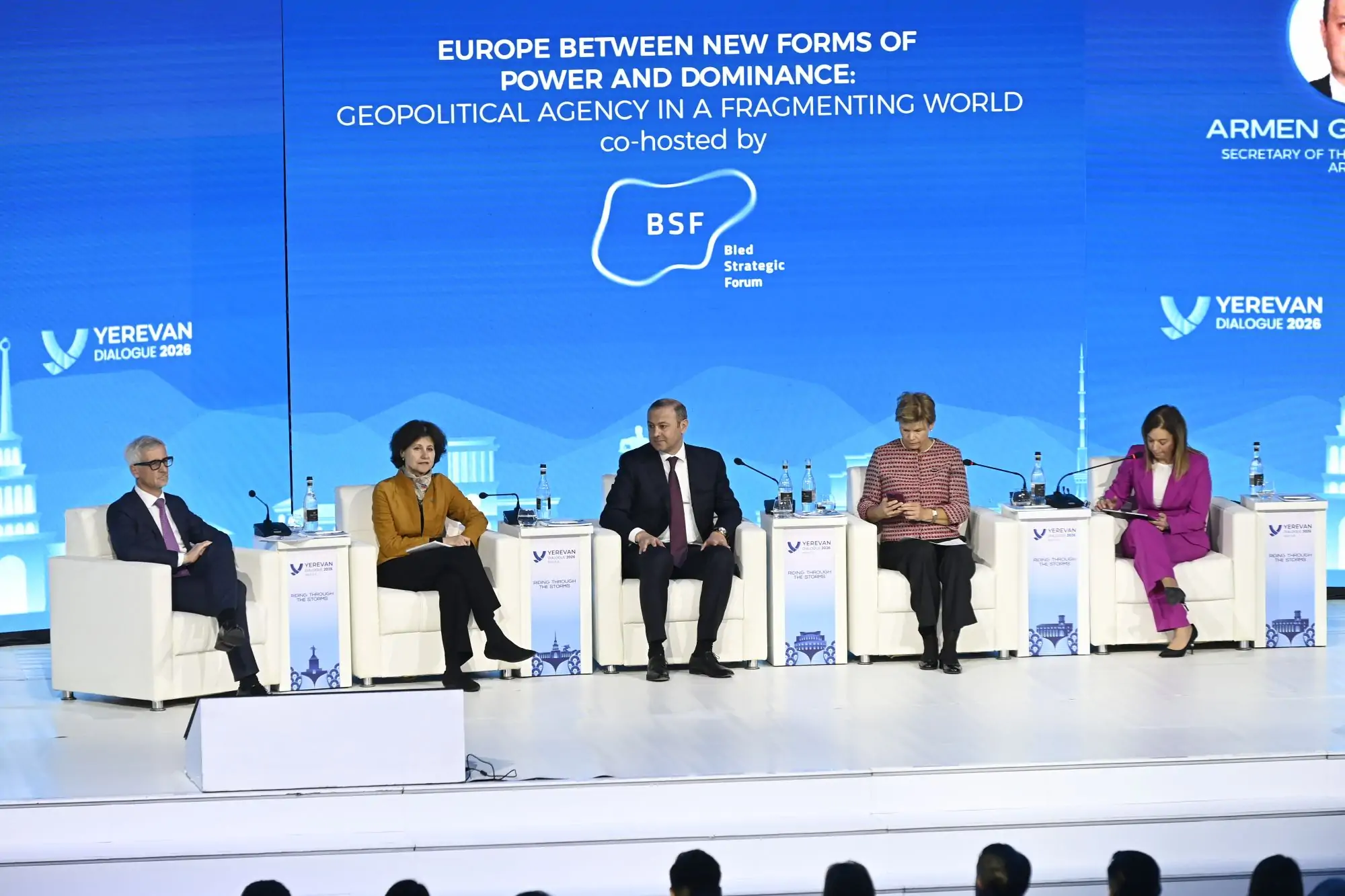
Europe Between New Forms of Power and Dominance: Geopolitical Agency in a Fragmenting World (co-hosted by BSF)

Amid growing geopolitical fragmentation and shifting global power dynamics, the panel discussion “Europe Between New Forms of Power and Dominance: Geopolitical Agency in a Fragmenting World,” held within the framework of the Yerevan Dialogue 2026 and co-hosted by the Bled Strategic Forum, explored Europe’s evolving role within an increasingly complex international order.

The discussion examined the structural transformation of the international system, characterized by intensifying geopolitical competition, regional conflicts, and mounting pressure on multilateral governance frameworks. Participants explored how traditional understandings of power are being reshaped through technological innovation, financial systems, and increasingly interconnected global networks.

The session was moderated by Simona Leskovar, Programme Director of the Bled Strategic Forum of Slovenia. The keynote address was delivered by Baiba Braže, Minister for Foreign Affairs of Latvia. The panel also featured Armen Grigoryan, Secretary of the Security Council of Armenia; Audra Plepytė, Deputy Foreign Minister of Lithuania; and Jernej Pikalo, Professor of Political Science and Globalization at the University of Ljubljana, former Deputy Prime Minister and former Minister of Education of Slovenia.

Particular attention was devoted to Europe’s position between traditional state-centered power politics and emerging forms of influence driven by technology, capital, and transnational systems. The discussion emphasized that preserving Europe’s geopolitical agency will depend on its capacity to adapt to new forms of power while maintaining its commitment to multilateralism, international cooperation, and shared democratic values.

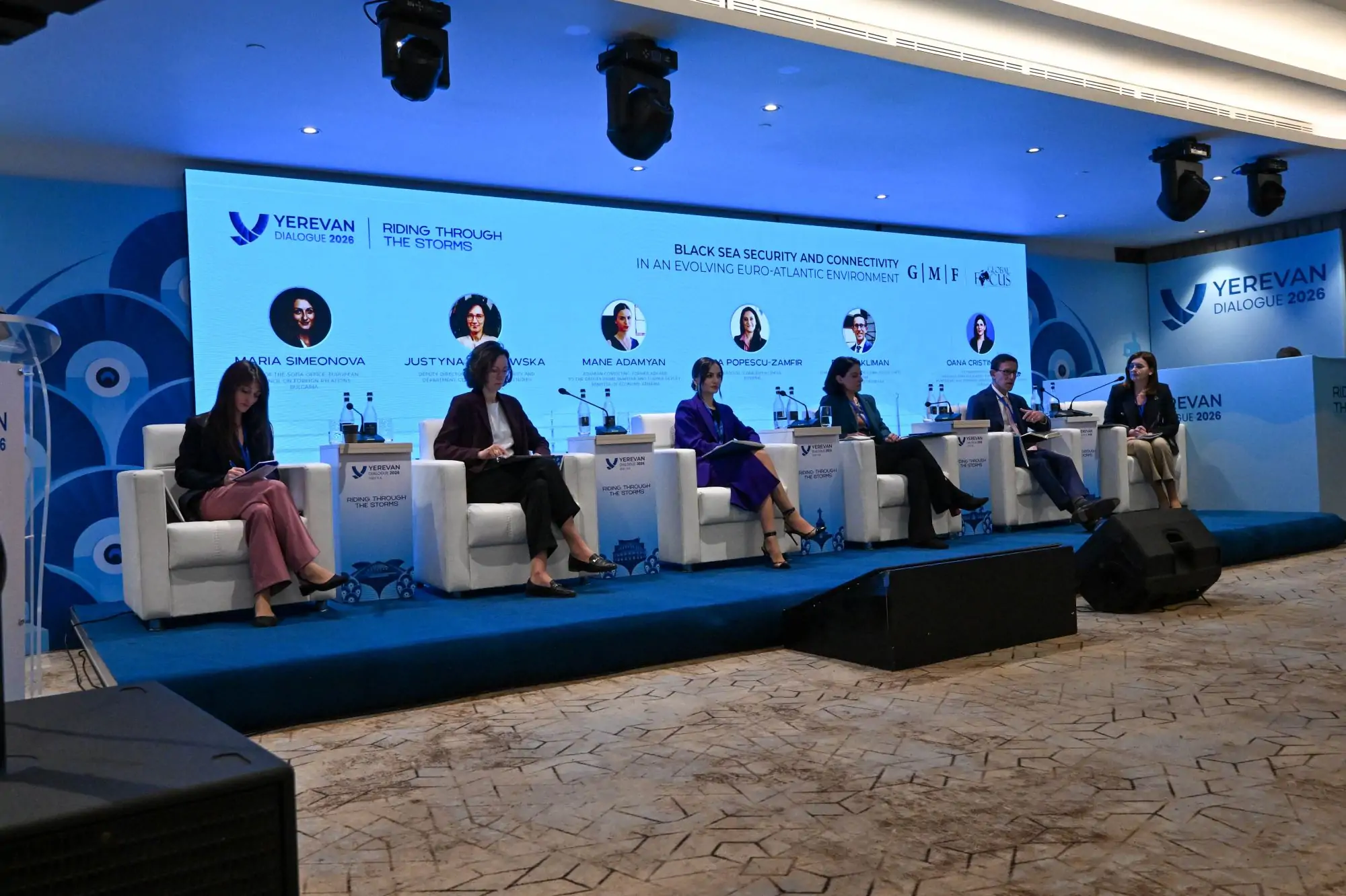
Black Sea Security and Connectivity in an Evolving Euro-Atlantic Environment (co-hosted by German Marshal Fund and GlobalFocus Center)

As the Black Sea region gains increasing strategic importance within the broader Euro-Atlantic environment, the panel discussion “Black Sea Security and Connectivity in an Evolving Euro-Atlantic Environment,” held within the framework of the Yerevan Dialogue 2026 and co-hosted by the German Marshall Fund and the GlobalFocus Center, explored the intersection of regional security and economic connectivity.

The discussion focused on the growing relevance of the Black Sea as a critical junction between geopolitical dynamics and trade connectivity. Participants examined how disruptions affecting maritime security and trade routes are reshaping regional priorities while increasing the significance of alternative corridors connecting Europe with the South Caucasus, the Caspian region, and Central Asia.

Moderated by Oana Cristina Popa, Distinguished Fellow of the German Marshall Fund in Bucharest and former EU Ambassador to Montenegro and Romania’s Ambassador to Serbia and Croatia, the panel featured Daniel Kliman, Senior Vice President for Global Power Shifts of the German Marshall Fund of the United States; Oana Popescu-Zamfir, Director of the GlobalFocus Center of Romania; Mane Adamyan, Representative of Adamian Consulting and Former Adviser to the Deputy Prime Minister and Former Deputy Minister of Economy of Armenia; Justyna Gotkowska, Deputy Director and Head of the Security Department of the Centre for Eastern Studies of Poland; and Maria Simeonova, Head of the Sofia Office of the European Council on Foreign Relations of Bulgaria.

Particular attention was devoted to the relationship between security and infrastructure development, including regional initiatives designed to strengthen resilience, diversification, and cooperation grounded in international norms. Participants emphasized that the Black Sea region is becoming increasingly integrated into a wider Euro-Atlantic strategic framework, where coordinated approaches to connectivity and security remain essential for promoting long-term stability and sustainable development.

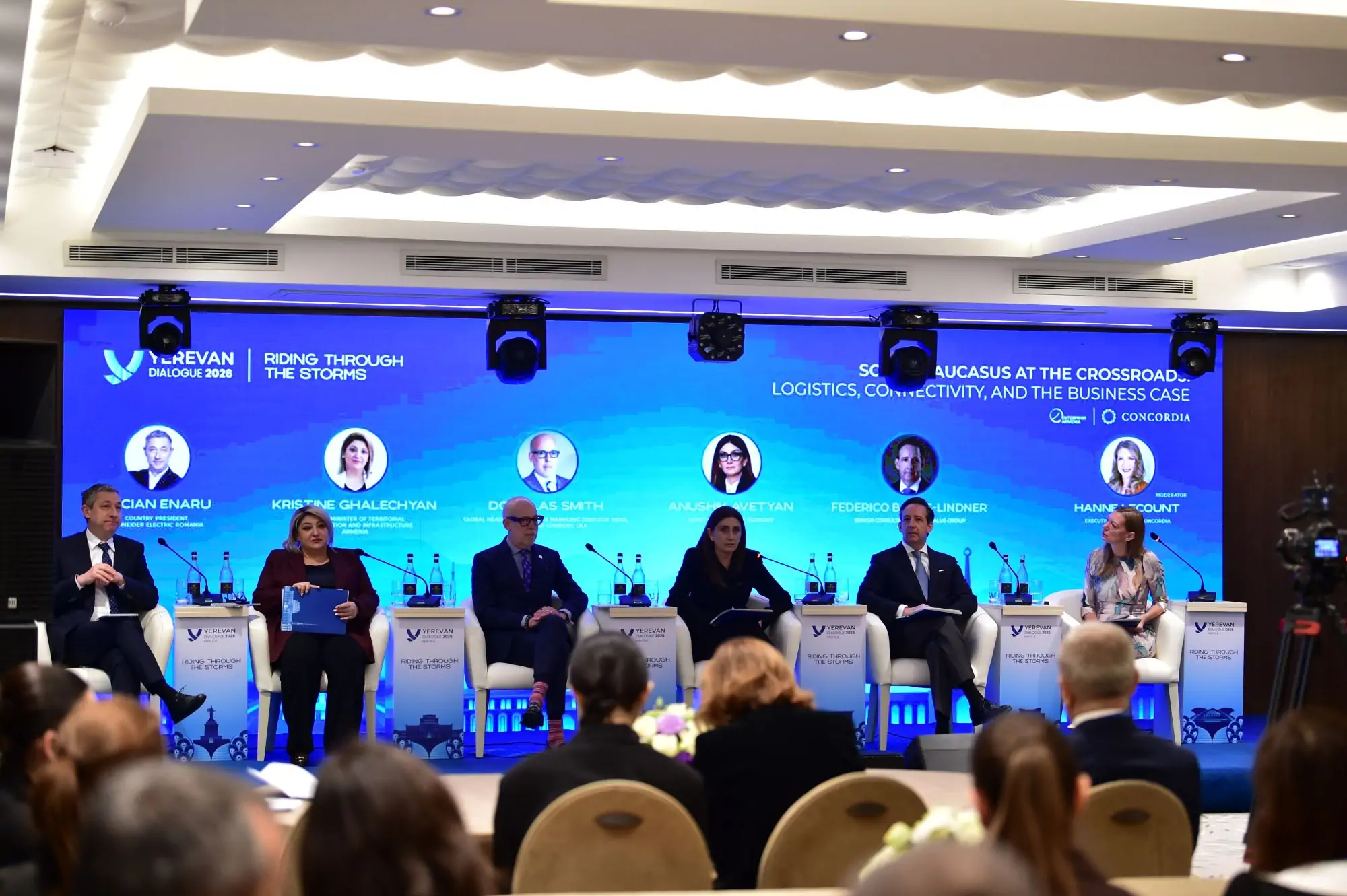
South Caucasus at the Crossroads: Logistics, Connectivity, and the Business Case (co-hosted by Enterprise Armenia and Concordia)

Held within the framework of the Yerevan Dialogue 2026 and co-hosted by Enterprise Armenia and Concordia, the panel discussion titled “South Caucasus at the Crossroads: Logistics, Connectivity, and the Business Case” explored the evolving role of the South Caucasus in global connectivity and regional economic integration.

The discussion focused on the transformation of Asia–Europe transport and trade routes, highlighting the increasing significance of transcontinental corridors. Participants examined how emerging infrastructure initiatives are reshaping regional logistics and strengthening the position of the South Caucasus as an increasingly important transit hub.

The session was moderated by Hanne LeCount, Executive Director of Concordia of the United States, and featured Federico Banos-Linder, Senior Consultant of The Tantalus Group of Germany; Anushik Avetyan, Deputy Minister of Economy of Armenia; Douglas Smith, Global Head of Public Affairs and Managing Director for MENA of The Nuclear Company of the United States; Kristine Ghalechyan, Deputy Minister of Territorial Administration and Infrastructure of Armenia; and Lucian Enaru, Country President of Schneider Electric Romania.

Particular attention was devoted to Armenia’s role within emerging connectivity frameworks linking Europe and Asia, including ongoing developments in transport infrastructure and logistics networks. Participants emphasized that the future of regional connectivity will depend on combining physical infrastructure with digital capabilities, enabling the South Caucasus to develop not only as a transit corridor, but also as a dynamic economic and technological hub.

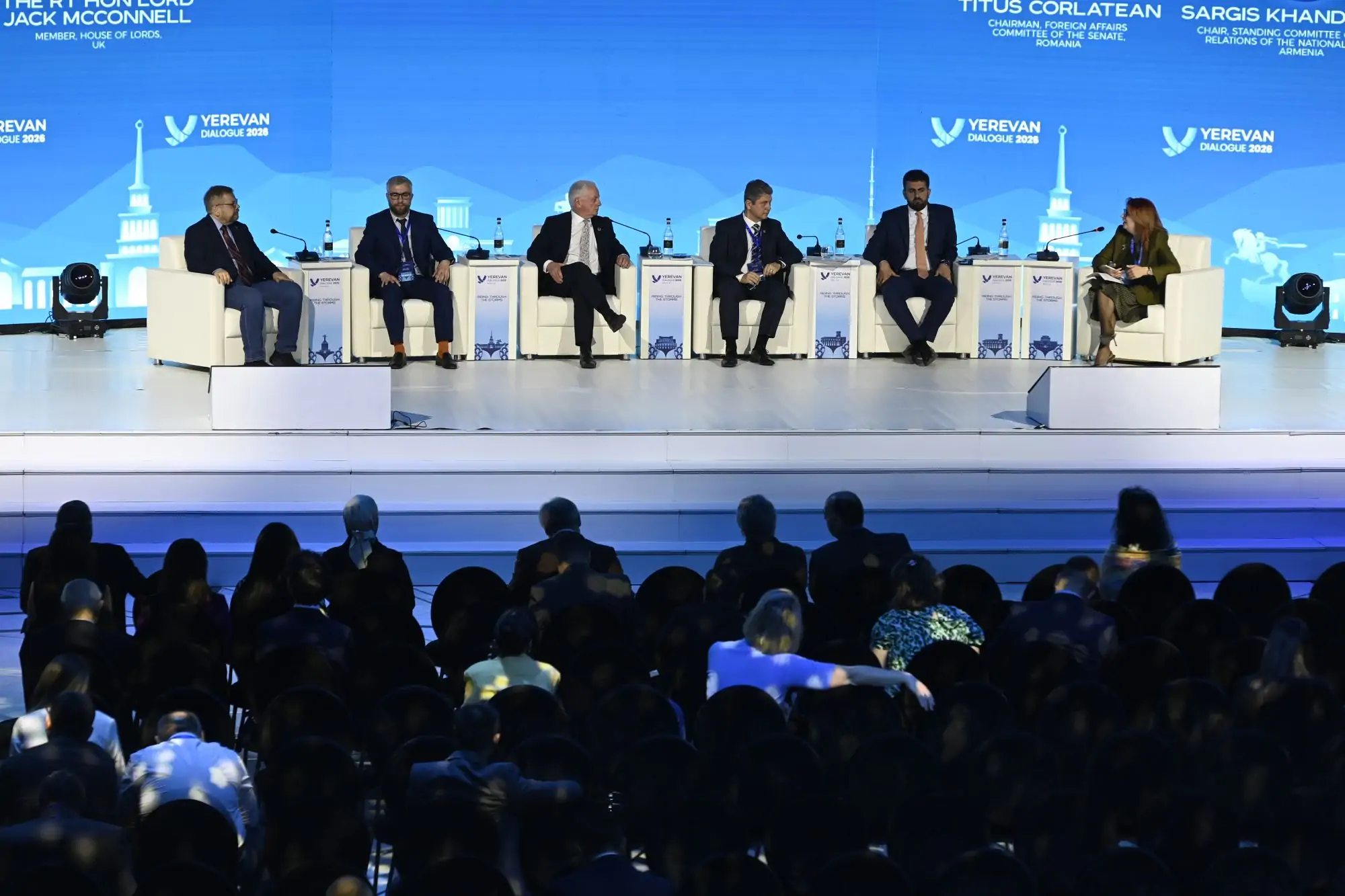
Parliaments in a Fragmenting World: Safeguarding Democracy and Navigating Geopolitical Change

As geopolitical fragmentation and democratic pressures continue to reshape the international environment, the panel discussion “Parliaments in a Fragmenting World: Safeguarding Democracy and Navigating Geopolitical Change,” held within the framework of the Yerevan Dialogue 2026, explored the evolving role of legislative institutions in addressing contemporary global challenges.

Moderated by Gayane Abrahamyan, President of the For Equal Rights Educational Center of Armenia, the panel brought together Sargis Khandanyan, Chair of the Standing Committee on Foreign Relations of the National Assembly of Armenia; Titus Corlatean, Chairman of the Foreign Affairs Committee of the Senate of Romania; Jack McConnell, Member of the House of Lords of the United Kingdom; Dmytro Mykysha, Member of Parliament of the Verkhovna Rada of Ukraine; and Ivan Racan, Deputy Chair of the EU Affairs Committee of the Parliament of Croatia.

Participants discussed the growing importance of parliaments in safeguarding democratic accountability, strengthening institutional resilience, and ensuring effective governance in an increasingly uncertain international environment. The conversation also explored how legislative institutions can balance domestic priorities with international responsibilities while maintaining dialogue during periods of geopolitical tension.

A significant part of the discussion focused on parliamentary diplomacy and its role in promoting cooperation across Europe and its wider neighborhood amid shifting governance frameworks and rising fragmentation. Participants highlighted the importance of inter-parliamentary engagement in supporting democratic institutions, fostering shared values, and strengthening regional cooperation.

The discussion underscored that in a rapidly evolving global landscape, parliaments continue to serve not only as legislative bodies, but also as key actors in reinforcing democratic principles, shaping resilient governance systems, and navigating geopolitical change.