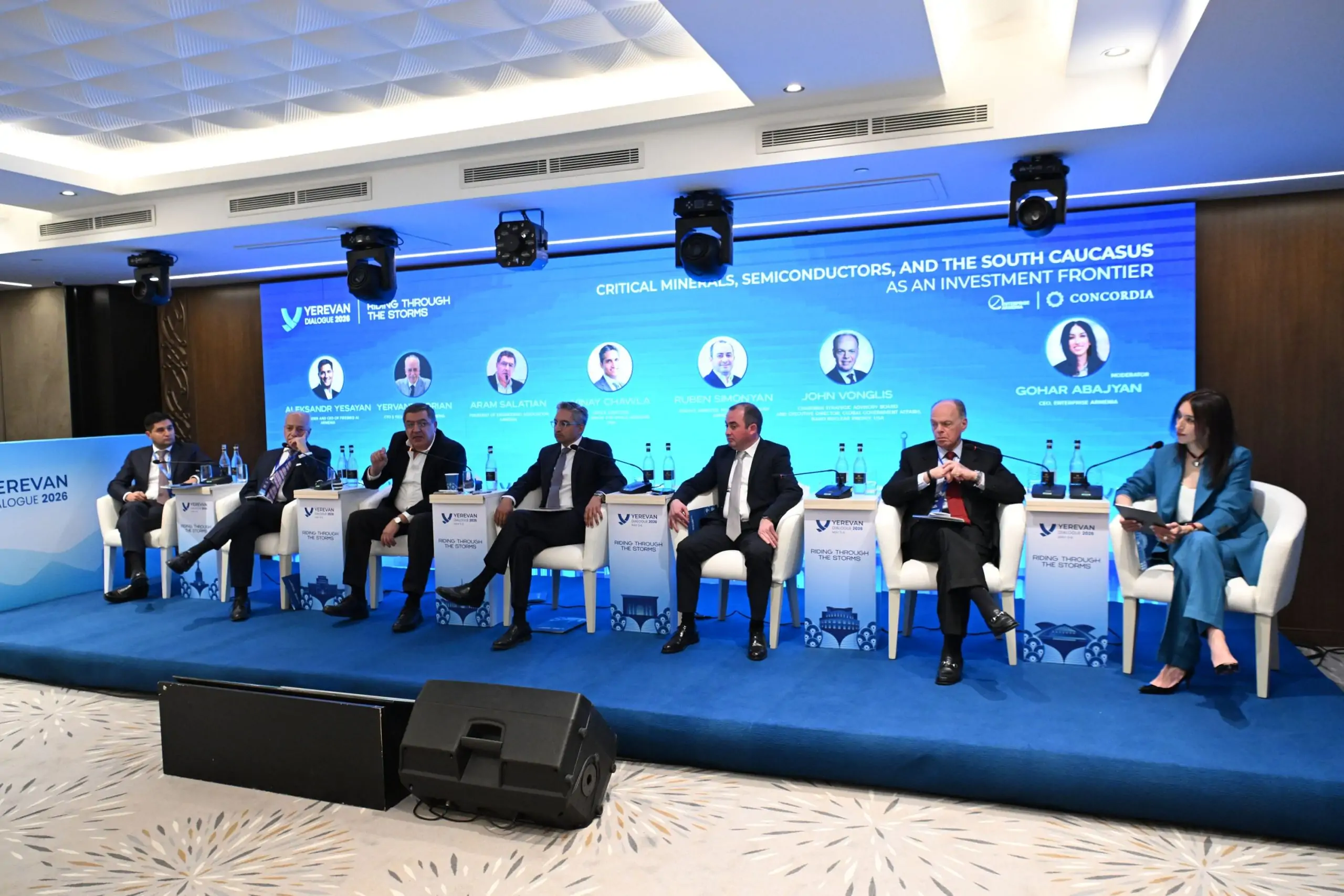
Critical Minerals, Semiconductors, and the South Caucasus as an Investment Frontier

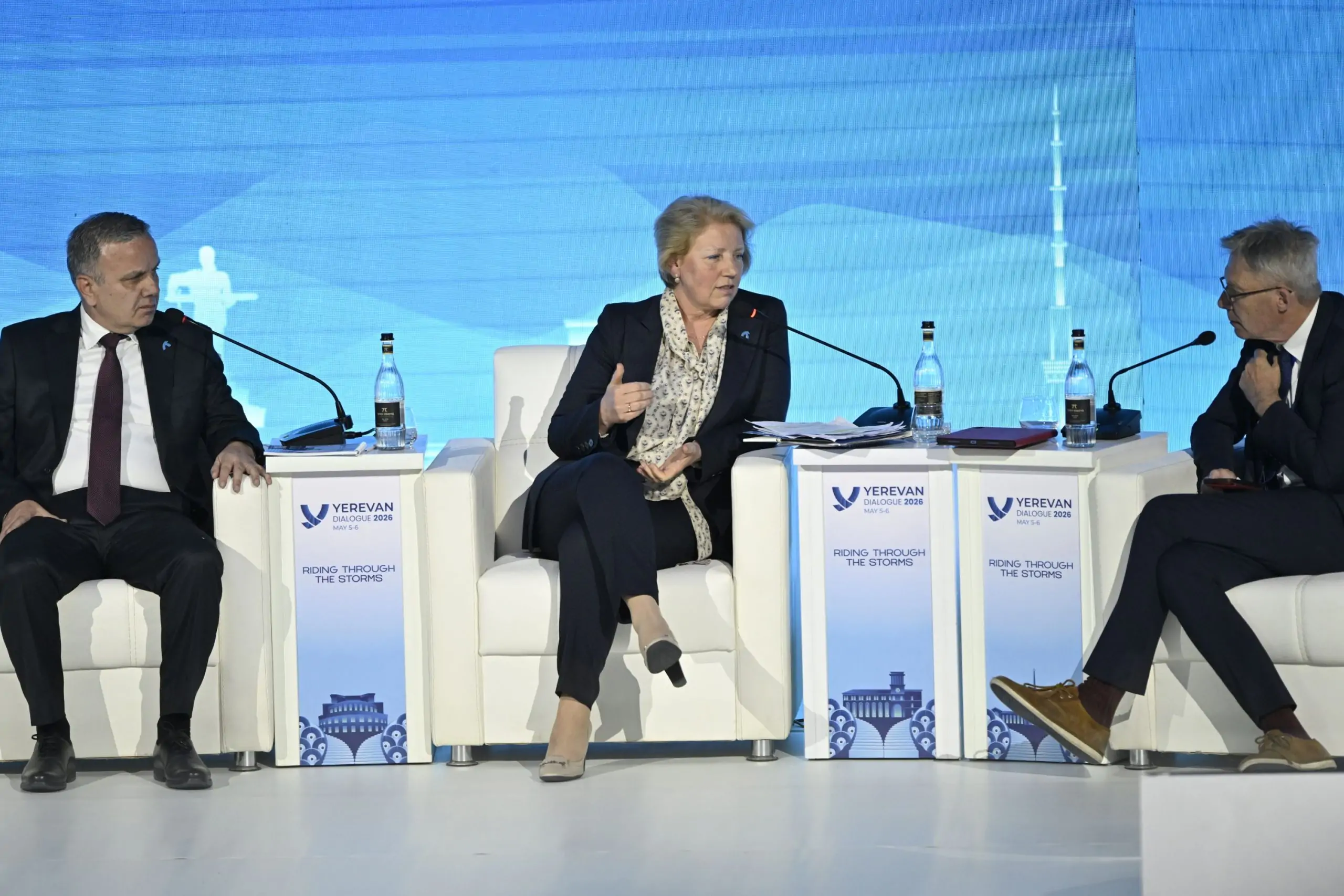
The panel discussion “Critical Minerals, Semiconductors, and the South Caucasus as an Investment Frontier” was held within the framework of the Yerevan Dialogue 2026, co-hosted by Enterprise Armenia and Concordia, bringing together policymakers, industry leaders, and experts to explore emerging opportunities in strategic sectors.

The panel discussion was moderated by Gohar Abajyan, CEO of Enterprise Armenia of Armenia, and brought together John Vonglis, Chairman of the Strategic Advisory Board and Executive Director of Global Government Affairs of Nano Nuclear Energy of the United States, Ruben Simonyan, Deputy Minister of High-Tech Industry of Armenia, Vinay Chawla, Office Director of the Special Envoy for Peace Missions of the United States, Aram Salatian, President of the Engineering Association of Armenia, Yervant Zorian, CTO and Fellow of Synopsys Armenia; and Aleksandr Yesayan, Co-founder and CEO of Firebird AI of Armenia. 

The discussion examined the growing significance of critical minerals and advanced technologies in shaping global economic and geopolitical dynamics. Participants analyzed how supply chains for semiconductors and strategic resources are becoming increasingly central to national security, industrial policy, and international competition.

Particular attention was devoted to Armenia’s potential to integrate into global supply chains, supported by its investment climate, technological capabilities, and expanding innovation ecosystem. Participants also highlighted ongoing initiatives in the high-tech sector, including large-scale infrastructure and data-driven projects, as well as emerging opportunities for international cooperation. The discussion further underscored the rising importance of the South Caucasus as an emerging investment destination and emphasized the need to align economic development strategies with global technological and industrial trends.

Navigating Global Geopolitical Shifts in a Multipolar World: Strategic Autonomy or Strategic Alignment?

Within the framework of the Yerevan Dialogue 2026, the panel discussion “Navigating Global Geopolitical Shifts in a Multipolar World: Strategic Autonomy or Strategic Alignment?” assembled policymakers and experts to analyze the transformation of the international system. 

The panel discussion was moderated by Patrick Wintour, Diplomatic Editor of The Guardian of the United Kingdom, and brought together Andreja Metelko-Zgombić, State Secretary for Europe of the Ministry of Foreign and European Affairs of Croatia, Zoran Dimitrovski, Deputy Minister of Foreign Affairs and Foreign Trade of North Macedonia, Lilit Makunts, Chief Advisor to the Prime Minister of Armenia, and Zaur Shiriyev, Nonresident Scholar of the Carnegie Russia Eurasia Center of Azerbaijan. 

The discussion centered on the ongoing transition from a unipolar to a more complex multipolar order, characterized by intensifying competition among major powers, shifting alliances, and evolving patterns of economic interdependence. Participants examined how states and regions adapt to these dynamics and evaluate their strategic positioning within an increasingly uncertain international environment.

Considerable attention was devoted to the debate between strategic autonomy and strategic alignment, with participants assessing the opportunities and limitations associated with each approach. The role of regional actors in shaping emerging power configurations and maintaining policy flexibility was also emphasized. The panel concluded that navigating a multipolar world necessitates adaptive strategies, diversified partnerships, and a careful balance between national interests and broader geopolitical considerations in a rapidly evolving global landscape.

Regional Identity and Strategic Autonomy: The Asia-Pacific Response to Great Power Rivalries

Held within the framework of the Yerevan Dialogue 2026, the panel discussion “Regional Identity and Strategic Autonomy: The Asia-Pacific Response to Great Power Rivalries” explored the changing role of Asia-Pacific states in an increasingly competitive international system. 

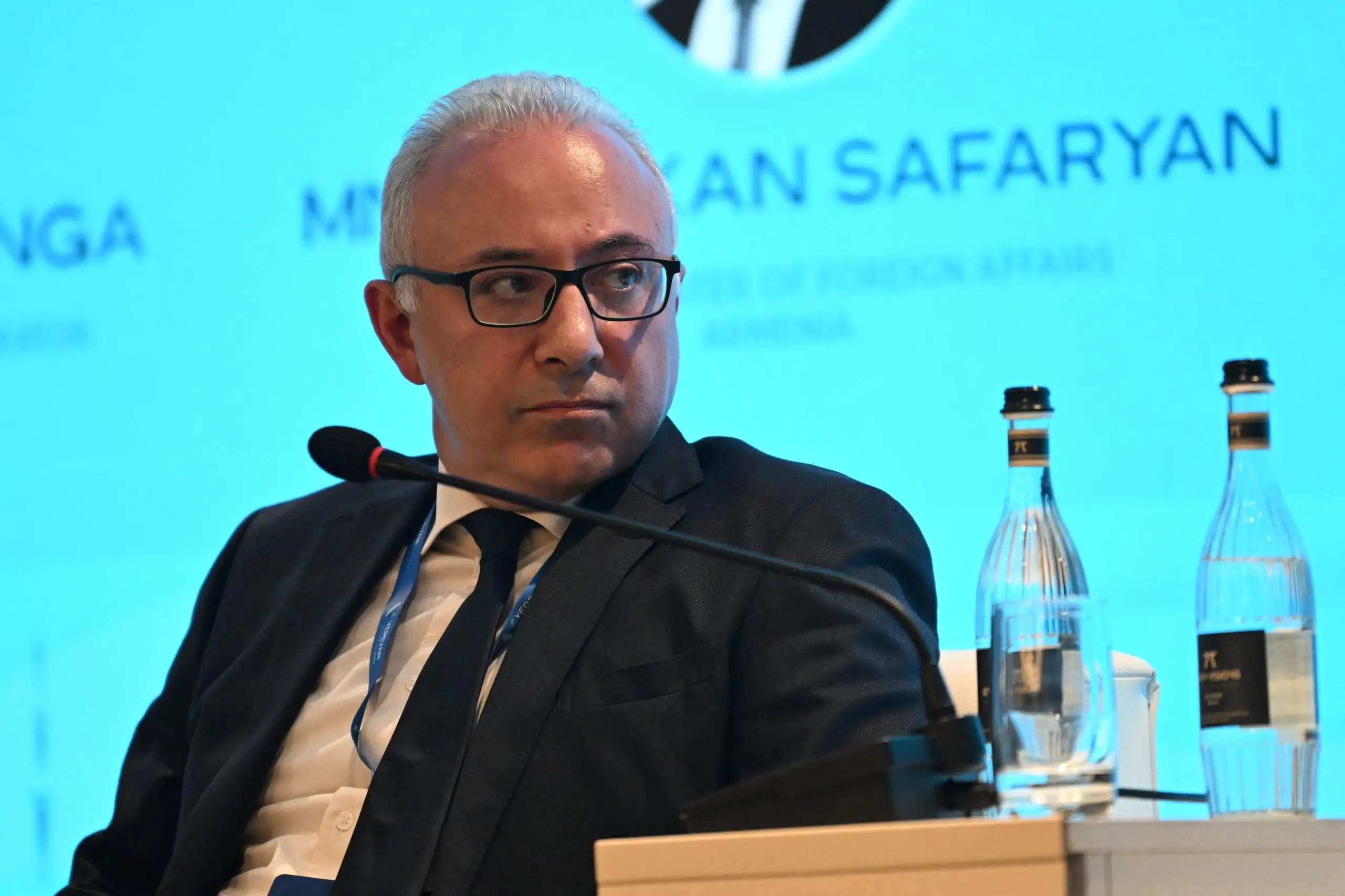
The panel discussion was moderated by Manish Chand, CEO of the Centre for Global India Insights of India, and brought together Arthayudh Srisamoot, Special Envoy of the Minister of Foreign Affairs of Thailand, Mnatsakan Safaryan, Deputy Minister of Foreign Affairs of Armenia, Lê Nguyễn Thiên Nga, Director of the Institute of Policy Administration and Development Strategy of Viet Nam, and Aisha Kusumasomantri, Director of Cooperation and External Affairs of Indo-Pacific Strategic Intelligence of Indonesia. 

The discussion explored how countries in the region navigate intensifying geopolitical rivalries while seeking to preserve strategic autonomy. Participants examined the ways in which states pursue independent foreign, security, and economic policies, while maintaining engagement with multiple global actors. Particular attention was given to strategic autonomy as a flexible and pragmatic approach within the context of great power competition.

Participants further emphasized that regional identity plays an increasingly important role in shaping strategic choices, enabling states to balance external pressures while safeguarding national interests. The Asia-Pacific experience was highlighted as offering valuable insights into managing geopolitical complexity through diversified partnerships, inclusive regional frameworks, and adaptive policy approaches in a rapidly evolving international order.

Democratic Resilience, Hybrid Threats and AI: Safeguarding Democratic Elections

A panel discussion titled “Democratic Resilience, Hybrid Threats and AI: Safeguarding Democratic Elections” was held within the framework of the Yerevan Dialogue 2026, co-hosted by CAPS (Strategy, Analysis and Policy Planning Centre of Ministry of Foreign Affairs), bringing together international experts and practitioners to explore the intersection of technological developments and democratic security.

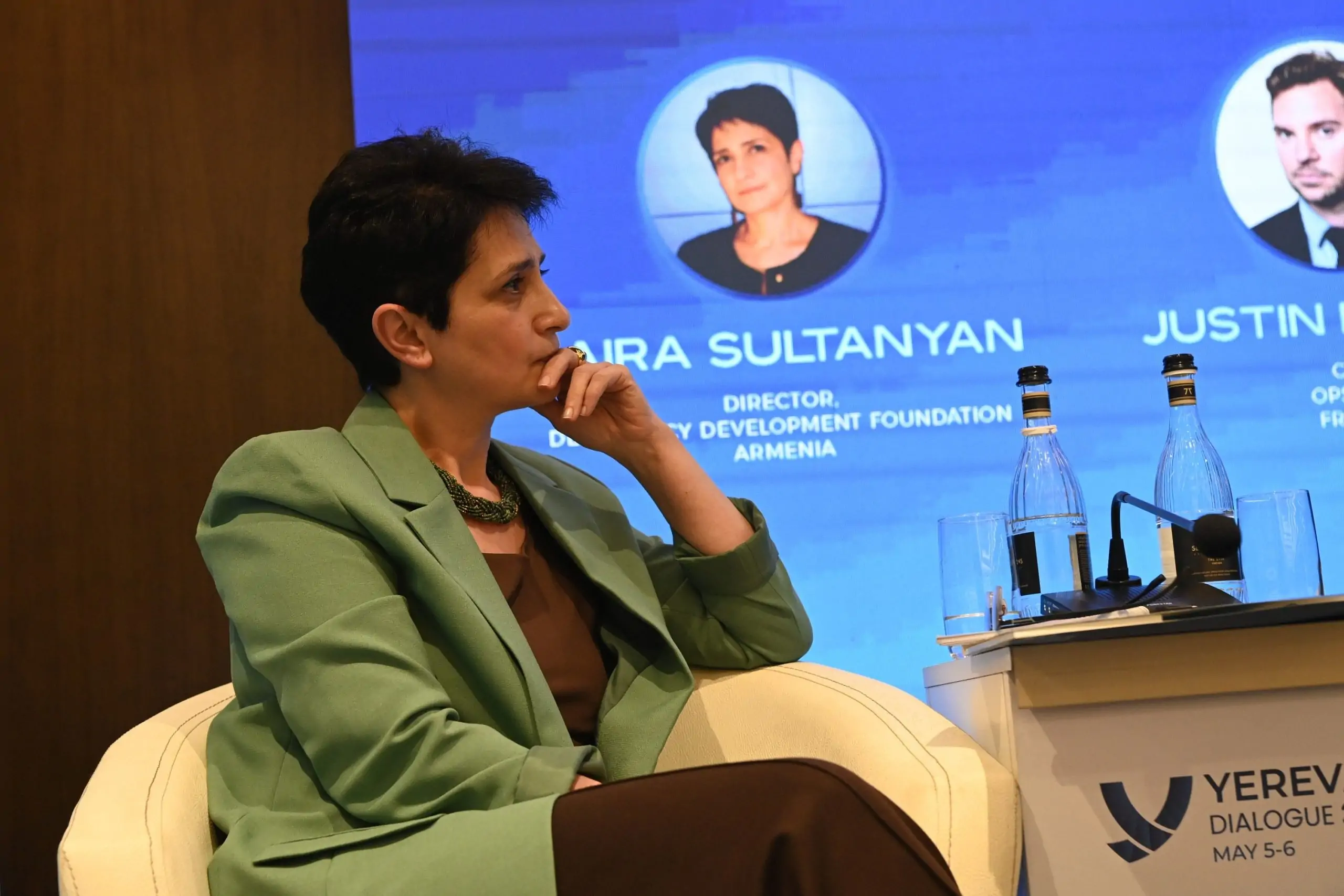
The panel discussion was moderated by Tristan Aureau, Director of the Strategy, Analysis and Policy Planning Centre of the Ministry of Foreign Affairs of France. The Speakers, including Mantas Adomenas, Secretary General of the Community of Democracies of Lithuania, Sviatlana Tsikhanouskaya, Maxim Behar, President of the World Communications Forum Association in Bulgaria, Camille Grenier, Executive Director of the Forum on Information and Democracy of France, Justin Poncet, CEO of opsci.ai in France, and Naira Sultanyan, Director of the Democracy Development Foundation of Armenia, focused on the growing influence of artificial intelligence on the information space and its implications for electoral processes. They noted that technological advancements are reshaping communication environments while simultaneously enabling new forms of interference that affect public trust and voter behavior.

Particular attention was paid to the evolution of hybrid threats, including disinformation and AI-enabled manipulation, which increasingly operate in the cognitive domain and directly impact the integrity of democratic processes. Participants highlighted the need for comprehensive responses that combine innovation, regulatory approaches, and strengthened societal resilience.

The discussion underscored that protecting democratic elections requires coordinated efforts among public institutions, the private sector, and civil society, alongside enhanced international cooperation based on shared democratic principles.

South Caucasus at a Turning Point: Prospects for Peace and Cooperation

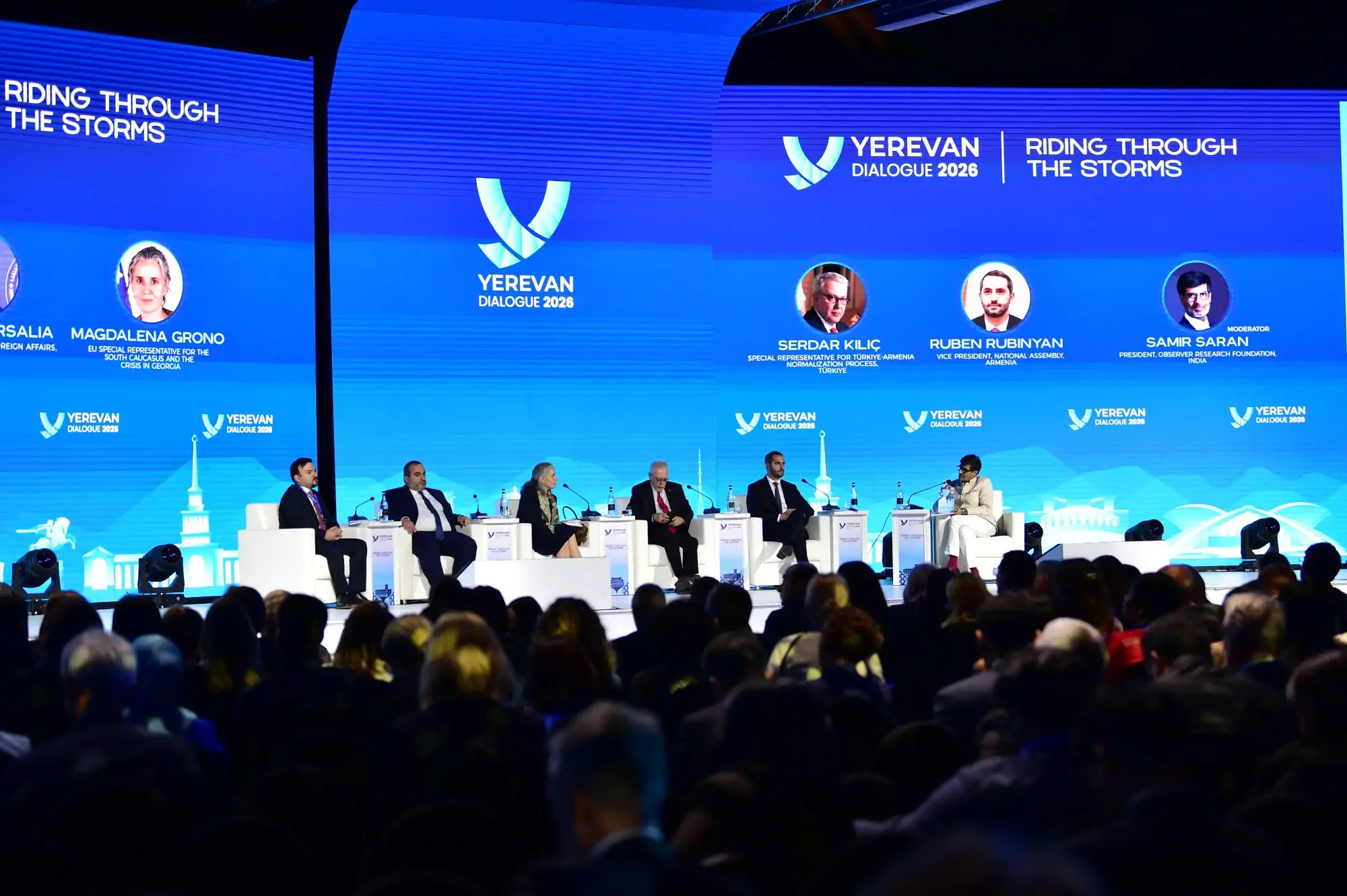
The panel discussion “South Caucasus at a Turning Point: Prospects for Peace and Cooperation” was held as part of the Yerevan Dialogue 2026, bringing together regional stakeholders to examine the evolving role of connectivity in shaping the future of the South Caucasus.

The discussion highlighted that infrastructure, transport corridors, and trade routes are becoming strategic tools influencing regional dynamics, political alignments, and economic interdependence. In this context, participants explored how connectivity initiatives can either reinforce divisions or contribute to long-term stability and cooperation.

The panel discussion, moderated by Samir Saran, President of the Observer Research Foundation of India, brought together Ruben Rubinyan, Vice President of the National Assembly of Armenia, Serdar Kılıç, Special Representative for the Türkiye – Armenia Normalization Process of Türkiye; Magdalena Grono, EU Special Representative for the South Caucasus and the Crisis in Georgia; Lasha Darsalia, Deputy Minister of Foreign Affairs of Georgia; and Rusif Huseynov, Director of the Topchubashov Center of Azerbaijan.

Particular attention was given to the growing geopolitical significance of regional connectivity projects, including their potential to transform the South Caucasus into a space of cooperation rather than competition. Participants also reflected on the role of dialogue, confidence-building measures, and inclusive economic frameworks in advancing sustainable peace.

The discussion emphasized that the future of the region will largely depend on the ability of regional actors to move beyond zero-sum approaches and to develop mutually beneficial frameworks based on cooperation, openness, and long-term strategic vision.